
Updated: 07/27/2018 | July 27th, 2018
Hong Kong. Its name inspires visions of a chaotic, jam packed city with soaring skyscrapers, thick smog, endless noodle stands, big finance, and wild nights out. It’s one of my top five favorite cities in the world, and I relish any chance to visit. The fast pace creates a sense of permanent change, and the crowds, multiculturalism, and food keep me continuously coming back. Oh, the food! I could sit bent over a noodle bowl all day long!
Hong Kong is a busy city of eight million inhabitants with one of the biggest hub airports in the world. It can be overwhelming for many visitors, especially those not used to crowded places. And, with so much to do here, one can scratch one’s head about where to start in order get the most out of the trip.
This four-day Hong Kong itinerary will help you organize your trip, steer you off the beaten path, and show you why Hong Kong is one of the most on-the-go cities in the world.
What Do in Hong Kong: Day 1

The Hong Kong Museum of History
In order to understand a place, you must first understand its past. This museum lets you do just that. It provides an excellent overview of Hong Kong’s long and complex past. There are exhibits relating to the archaeology, social history, ethnography, and natural history of the region. It’s big, so allow about 2–4 hours for your visit. Admission is 10 HKD (free on Wednesdays) and there is an audio tour available for 10 HKD.
100 Chatham Road South, Tsim Sha Tsui, Kowloon, +852 2724 9042, hk.history.museum. Open daily from 10am-6pm (7pm on weekends).
Walk through Kowloon Park
Head to Kowloon Island’s gigantic park that features a swimming pool, a fitness center, little ponds where you can watch ducks and other swimming birds, a Chinese garden, an aviary, and plenty of rest areas where you can relax to escape the oppressive Hong Kong heat. It’s one of the best places to people-watch in the city.
22 Austin Rd, Tsim Sha Tsui, Kowloon, +852 2724 3344, lcsd.gov.hk. Open daily from 5am-12am and admission is free.
The street markets in Mong Kok
This area of Hong Kong has the largest and busiest markets in which to soak up the frenetic atmosphere, sights, and sounds of Hong Kong. The crowds and sellers really exemplify Hong Kong’s on-the-move essence. The two best markets for inexpensive souvenirs are the Ladies Market (bargain clothing, accessories, and souvenirs) and the Temple Street Night Market (flea market). The markets of Mong Kok are best reached by the Hong Kong MTR subway system, stations Yau Ma Tei, Mong Kok, and Prince Edward on the Tsuen Wan (red) line
Tung Choi St, Mong Kok, Hong Kong and Temple St, Jordan, Hong Kong. The markets are open every day, starting around noon and closing in the late evening (times vary).
Tsim Sha Tsui Promenade — Stroll along the Tsim Sha Tsui waterfront and take in the breathtaking skyline view of Hong Kong Island. While you’re here, make sure to visit the Avenue of Stars, Hong Kong’s answer to the Hollywood “Walk of Fame,” where you can see the stars of Chinese and Western film alike. There are shops, restaurants, and, at night, a large outdoor market serving traditional Cantonese food alongside knockoffs and souvenirs. Come ready to haggle.
Salisbury Road, Tsim Sha Tsui, Kowloon (next to the Star Ferry pier). Open 24/7.
Take the Star Ferry
The best way to get across the harbor from Kowloon Island to Hong Kong Island is via the Star Ferry, which showcases a fantastic view of the city skyline for only 2.70 HKD. It’s one of my favorite activities.
Star Ferry Pier, Kowloon Point, Tsim Sha Tsui, +852 2367 7065, Kowloonstarferry.com. The ferry runs from 6:30am-11:30pm every day, though they occur less frequently on weekends and holidays. Single tickets are 2.70 HDK, while a 4-day pass will cost around 27.50 HKD.
What Do in Hong Kong: Day 2

Ride Ngong Ping 360
This cable car runs a little over 3.5 miles, from Tung Chung across the bay toward the airport and then onward to Lantau Island, where you can visit the Po Lin Monastery. The cable car gives you a panoramic view of the airport, harbor, and entire city before it travels through the surrounding mountains. The ride lasts about 25 minutes. Lantau Island is a bit touristy, but the ride and monastery provide worthwhile views of the city and little islands that dot Hong Kong.
11 Tat Tung Road, Tung Chung, Lantau Island, +852 3666 0606, np360.com. Open 10am-6pm on weekdays and 9am-6:30pm on weekends on holidays. A round-trip adult ticket for the cable car is 210 HKD for a standard cabin and 290 HKD for a crystal cabin (a cable car with a glass bottom floor).
Take a food tour — After the morning on the cable car and enjoying a killer view of Hong Kong, spend lunchtime taking a food tour. Hong Kong is a food-filled city (there are over 10,000 restaurants here!) and you’ll find a diverse range from around the world. Without help, you’ll never find all the hidden local favorites. The following three companies offer the best value tours:
- Bigfoot Tours – They offer private small-group food tours, usually lasting around 4 hours. 650-2,200 HKD depending on how many people.
- Little Adventure in Hong Kong – Little Adventures offers street food tours, Cantonese cuisine tours, fine dining tours, and craft beer and cocktail tours. There is literally something for everyone!
- Hong Kong Foodie Tasting Tours – Four tours are available here, depending on what you’re looking to sample. All tasting are included in the price, which will be between 750-900 HDK per person.
Rent a junk boat
Junk boats — those classic boats with the large sail you see in any movie about Hong Kong — a fun way to sail around the harbor on full-day and half-day trips. You can rent a boat with a large group of friends (15 or so people) or join a group trip. Here are some recommended companies that offer affordable tours:
- Island Junks – They have a couple cruise options, costing around 650 HKD per person. You can also charter your own if you’ve got the money!
- Saffron Cruises – This is a great option if you can put together a large group of 20-30 people, as a charter will cost 9,000-18,500 HKD.
- Hong Kong Junks – This is more of the classic party boat experience, with options for all budgets.
What Do in Hong Kong: Day 3

Walk the Ping Shan Heritage Trail
Located in the New Territories (the city’s less visited northern district), this trail will lead you past some of the most important ancient sights of the Tang clan: the walled Hakka village of Tsang Tai Uk, the Fu Shin Street Traditional Bazaar, Che Kung Temple, Man Mo Temple, and the Temple of Ten Thousand Buddhas. Just be aware that not all of the historic buildings on the trail are open to the public.
Another option is the Lung Yeuk Tau Heritage Trail. It begins at the Taoist temple complex of Fung Ying Seen Koon and passes the walled villages of Ma Wat Wai and Lo Wai before ending at the 18th-century Tang Chung Ling Ancestral Hall.
This part of Hong Kong is often skipped by tourists, and the trails, meandering through the city’s more rural region, are quiet and a welcome break from the giant metropolis of the downtown area.
Ping Shan Trail: Sheung Cheung Wai, Yuen Long District, +852 2617 1959, lcsd.gov.hk. Lung Yeuk Tau Trail: 66 Pak Wo Rd, Fanling, Hong Kong, +852 2669 9186.
Hong Kong Heritage Museum
This museum showcases the city’s history and love of art. There’s a large exhibit about the New Territories and an opera house for performances. It fills in some of the blanks left from the Hong Kong History Museum and gives you a look at the artistic culture of the city. It’s also located near the beautiful Sha Tin Park and Shing Mun River, making the surrounding area just as interesting as the museum!
1 Man Lam Rd, Sha Tin, New Territories, +852 2180 8188, heritagemuseum.gov.hk. Open every day but Tuesday from 10am-6pm (7pm on weekends).
Che Kung Temple
Just down the road from the Heritage Museum, this temple is dedicated to Che Kung, a general during the Southern Song Dynasty (1127–1279) in ancient China. The temple complex here is always filled with people, so be prepared for crowds. The traditional architecture and intricate sculptures make this worth visiting after you see the Heritage Museum.
Che Kung Miu Road, +852 2691 1733, ctc.org.hk. Open daily from 7am-6pm.
What Do in Hong Kong: Day 4

The Peak Tram
This tram takes you to the top of the Peak, Hong Kong Island’s largest mountain, at 1,700 feet. You ride a funicular to the top where you enjoy spectacular 180-degree views of the skyscrapers of Victoria Harbor, Kowloon, and the surrounding hills. It’s the best view of the city.
No.1 Lugard Road, +852 2849 7654, thepeak.com.hk. You can take a return trip for 52 HKD or a return trip with entry to the sky terrace for 99 HKD per person.
Hong Kong Museum of Art- CLOSED FOR RENOVATIONS UNTIL 2019
This museum is a fascinating and intriguing place that exhibits Chinese ceramics, terra cotta, rhinoceros horns, and Chinese paintings, as well as contemporary art produced by Hong Kong artists. It’s part art museum, part Ripley’s Believe It or Not.
Tsim Sha Tsui, Hong Kong, +852 2721 0116. Open from 9am-6pm everyday but Saturday.
Experience the nightlife at Lan Kwai Fong
LKF is the main nightlife and party area in Hong Kong and is filled with tons of bars, clubs, shisha (water pipes), and cheap drinks. Nights out here are wild — the street is always crowded, people get very drunk, and shots get handed out like candy. It’s rowdy, but if you want to see Hong Kong’s wilder side, this is the place to do it.
Other Things to See and Do in Hong Kong
- Day trip to Macau — The gambling mecca of Macau is a short boat ride away. For 150 HKD, the 60-75–minute boat ride from Hong Kong’s ferry terminal will take you to this former Portuguese colony, where you can wander gigantic modern casinos, stroll historic streets lined with Portuguese-inspired houses, and dine on egg tarts, a famous local specialty.
- Take a cooking class — Hong Kong is full of food. Why not learn how to cook some of it? This Hong Kong expat website has a list of 20 schools offering classes!
- Go hiking — Hong Kong may be a densely packed city, but there is also scenic hiking in the outer mountains and islands. There are a lot of trails (especially in the undeveloped parts of the New Territories). This link to the Hong Kong tourism board lists all the trails.
- Visit Disneyland — If you’re on a family trip, or if you’re a backpacker in touch with your inner child, head to Disneyland. Hang out with Mickey Mouse and shake hands with sea creatures.
***
In a city of eight million people, there are countless things to see and do. One could fill weeks exploring Hong Kong’s many islands, markets, restaurants, sights, and nightlife and still not see it all. Though impossible to condense a city so vast into four-days, this Hong Kong itinerary will help you experience the most Hong Kong has to offer in a short period of time!
NEXT STEP —- > Click here to get my in-depth insider’s guidebook to Hong Kong and plan the ultimate visit there!
Get the In-Depth Budget Guide to Hong Kong!
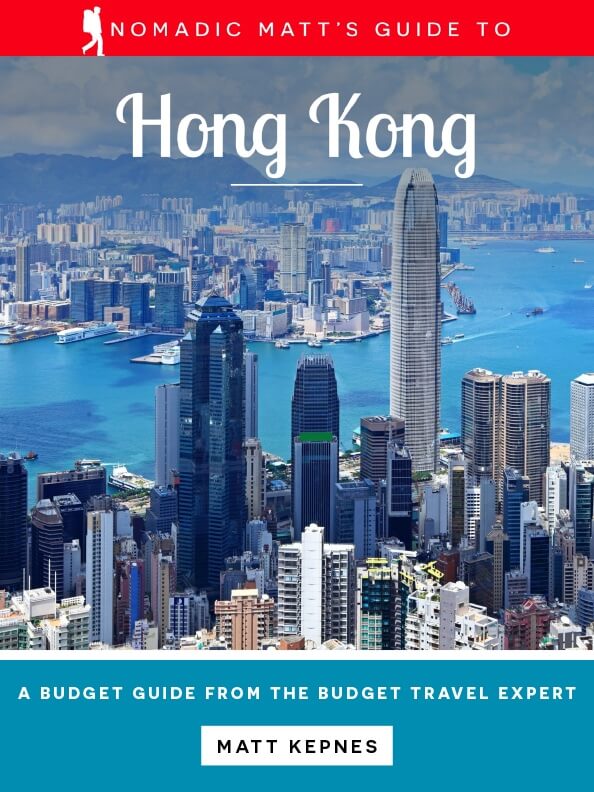 Want to plan the perfect trip to Hong Kong? Check out my comprehensive guide to Hong Kong written for budget travelers like yourself! It cuts out the fluff found in other guides and gets straight to the practical information you need to travel and save money in one of the most beautiful, and exciting in the world. You’ll find suggested itineraries tips budgets, ways to save money, on and off the beaten path things to see and do, and my favorite non-touristy restaurants, markets, and bars, and much more!! Click here to learn more and get started.
Book Your Trip to Hong Kong: Logistical Tips and Tricks
Book Your Flight
Find a cheap flight to Hong Kong by using Skyscanner or Momondo. They are my two favorite search engines. Start with Momondo.
Book Your Accommodation
You can book your hostel in Hong Kong with Hostelworld. If you want to stay elsewhere, use Booking.com as they consistently return the cheapest rates. (Here’s the proof.)
Don’t Forget Travel Insurance
Travel insurance will protect you against illness, injury, theft, and cancellations. I never ever go on a trip without it. I’ve been using World Nomads for ten years. You should too.
Need Some Gear?
Check out our resource page for the best companies to use!
Want More Information on Hong Kong?
Be sure to visit our robust destination guide on Hong Kong for even more planning tips!
The post Hong Kong Itinerary: What to Do in 4 Days appeared first on Nomadic Matt's Travel Site.


