Monday, 29 October 2018

Human and Animal Skulls Encrusted in Delicate Floral Filigree by Kengo Takahashi

Kengo Takahashi uses ultra-thin aluminum casting to get the precise shape of real flowers for his series titled Flower Funeral. The detailed works combine hundreds of delicate metal flowers that form the shape of skulls, and each have a thickness of just .01 mm. The works also contain life-size aluminum flowers like chrysanthemums across their forehead and branched horns, and sculptural water droplets that rest gently on several of their petals. You can see more of the Japanese artist’s sculptures on his website and Instagram.

An Immersive New Exhibition by OSGEMEOS Combines Street and Folk Art

After almost three months of working on-site at the Mattress Factory, OSGEMEOS (previously) revealed Lyrical, one of their most intimate and complex presentations to date. The exhibition includes a vast array of the Brazilian twins’ work, including paintings, sculptures, murals, in situ interventions, audio elements, found objects, and an impressive zoetrope sculpture originally created for their 2014 Ópera da Lua exhibition in São Paulo. An entire section of the show is built with pieces from their private collection, which includes folk art they’ve acquired during their travels. These collected works are displayed alongside small-scale pieces created especially for the exhibition.

Growing up in the bustling and multicultural Cambuci neighborhood of São Paulo, the brothers were exposed to hip hop at an early age. The pair started off as breakdancers, and have also dabbled as DJs and MCs before eventually becoming graffiti writers. Through street art, OSGEMEOS discovered their city’s rich culture, which helped develop their unique universe which they continue to expand upon today. Their installations, murals, and paintings are filled with colorful characters that imitate everyday people and friends, brought together to express the rich culture of the hip hop and graffiti world. You can visit Lyrical at the Mattress Factory through August 4, 2019.

The Art Institute of Chicago Now Offers Unrestricted Access to over 52,000 High-Resolution Images from Their Collection

Georges Seurat,” A Sunday on La Grande Jatte — 1884″ (1884–8), oil on canvas, 81 3/4 x 121 1/4 inches (image courtesy Helen Birch Bartlett Memorial Collection)

Georges Seurat,” A Sunday on La Grande Jatte — 1884″ (1884–8), oil on canvas, 81 3/4 x 121 1/4 inches (image courtesy Helen Birch Bartlett Memorial Collection)

The Art Institute of Chicago recently announced the release of tens of thousands of images from their collection to the public domain, providing high resolution access to the thick paint strokes of Van Gogh’s “The Bedroom,” the eerie light of Edvard Munch’s “The Girl by the Window,” or the pointillism used in George Seurat’s famous “A Sunday on La Grande Jatte — 1884.″ The works have been made available under the Creative Commons Zero (CC0) license, which presents the works without copyright. Visitors to the Art Institute’s website also can experience enhanced viewing for each image by zooming in on the paintings, drawings, and other artworks with more detail than before. The current image count is at 53,438, however the Art Institute explains that this number will continue to expand regularly. (via Hyperallergic)

Vincent van Gogh, “The Bedroom” (1888), oil on canvas, 29 x 36 5/8 inches (image courtesy Helen Birch Bartlett Memorial Collection)

Vincent van Gogh, “The Bedroom” (1888), oil on canvas, 29 x 36 5/8 inches (image courtesy Helen Birch Bartlett Memorial Collection)

Gustave Caillebotte, "Paris Street; Rainy Day" (1877), oil on canvas, 83 1/2 x 108 3/4 in, (image courtesy Charles H. and Mary F. S. Worcester Collection)

Gustave Caillebotte, “Paris Street; Rainy Day” (1877), oil on canvas, 83 1/2 x 108 3/4 in, (image courtesy Charles H. and Mary F. S. Worcester Collection)

Edvard Munch, “The Girl by the Window” (1893), oil on canvas, 38 × 25 3/4 inches (image courtesy Searle Family Trust and Goldabelle McComb Finn endowments; Charles H. and Mary F.S. Worcester Collection)

Edvard Munch, “The Girl by the Window” (1893), oil on canvas, 38 × 25 3/4 inches (image courtesy Searle Family Trust and Goldabelle McComb Finn endowments; Charles H. and Mary F.S. Worcester Collection)

Katsushika Hokusai, "Under the Wave off Kanagawa (Kanagawa oki nami ura), also known as the Great Wave, from the series "Thirty-six Views of Mount Fuji (Fugaku sanjurokkei)" (c. 1830/33), Color woodblock print, 10 x 14 3/4 in (courtesy of Clarence Buckingham Collection)

Katsushika Hokusai, “Under the Wave off Kanagawa (Kanagawa oki nami ura), also known as the Great Wave, from the series “Thirty-six Views of Mount Fuji (Fugaku sanjurokkei)” (c. 1830/33), Color woodblock print, 10 x 14 3/4 in (courtesy of Clarence Buckingham Collection)

661 x 992 mm (courtesy of Mr. and Mrs. Robert S. Hartman)

Charles White, “Harvest Talk” (1953), charcoal, Wolff’s carbon drawing pencil, and graphite, with stumping and erasing on ivory wood pulp laminate board, 661 x 992 mm (courtesy of Mr. and Mrs. Robert S. Hartman)  

Georgia O'Keeffe, "Cow's Skull with Calico Roses" (1931), oil on canvas, 36 × 24 in. (image courtesy Alfred Stieglitz Collection, gift of Georgia O'Keeffe)

Georgia O’Keeffe, “Cow’s Skull with Calico Roses” (1931), oil on canvas, 36 × 24 in. (image courtesy Alfred Stieglitz Collection, gift of Georgia O’Keeffe)

Piet Mondrian, “Lozenge Composition with Yellow, Black, Blue, Red, and Gray” (1921), oil on canvas, 60 x 60 cm (image gift of Edgar Kaufmann, Jr.)

Piet Mondrian, “Lozenge Composition with Yellow, Black, Blue, Red, and Gray” (1921), oil on canvas, 60 x 60 cm (image gift of Edgar Kaufmann, Jr.)

David Hockney, "American Collectors (Fred and Marcia Weisman)" (1968), acrylic on canvas (courtesy of Mr. and Mrs. Frederic G. Pick)

David Hockney, “American Collectors (Fred and Marcia Weisman)” (1968), acrylic on canvas (courtesy of Mr. and Mrs. Frederic G. Pick)


Sunday, 28 October 2018

My 15 Favorite Things to Do in Sydney

Photography of the coast of Sydney skyline and Opera House
Updated: 10/28/2018 | October 28th, 2018

The first time I was in Sydney (all the way back in 2007), I spent most of my days sitting in the botanical gardens, reading a book and looking at the Opera House and Harbour Bridge. For so long I had heard about how wonderful and beautiful Sydney was, and there I was experiencing it!

Over the years, I’ve been to the city a handful of times, exploring it more and more and getting a local taste through all my wonderful friends there. I’ve been everywhere, I’ve done all the major attractions, the smaller attractions, and everything in between.

If you are wondering what the best things to see in Sydney are, wonder no more!

Today, I want to share my favorite things to do and see in this laid-back, warm, sunny, and gregarious city so you can better plan your trip and make the most out of your visit!

The Best Things to See in Sydney

1. Explore The Rocks
The Rocks is the oldest part of Sydney. With its narrow lanes, fine colonial buildings, sandstone churches, and Australia’s oldest pubs, this neighborhood is where Sydney started when the British first landed. It was almost torn down in the 1970s for modern high rises, but, luckily, citizen action got it preserved instead. The Rocks’ weekend markets, art museums, street entertainment, delicious (and sometimes overpriced) restaurants, and beautiful views of the harbor, Opera House, and bridge make this is one of the coolest areas of the city. I love heading up to the Sydney Observatory Hill Park for a good view of the city, wandering the harbor promenade, and hitting the bars at night.

2. Hang out at the beach
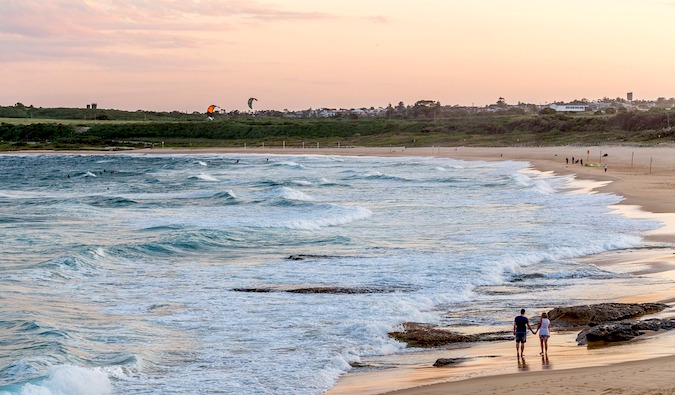
Pink sunset on the beach in Sydney
Sydney is synonymous with its beaches, and the area is also especially famous for having world-class surfing. Since it’s warm and sunny most of the year, the city has a strong beach culture, and on the weekends (and many weekdays for that matter), locals flock to the seashore. From Palm Beach and Manly in the north to the famous Bondi and Coogee in the south, Sydney has a beach for everyone. All the beaches are easy to get to via public transportation or car and there are tons of restaurants and surf shops around, too! My favorite beaches are Manly (wide and beautiful) and Bronte (small and quiet)

3. Visit the Royal Botanic Gardens and Mrs. Macquarie’s Chair
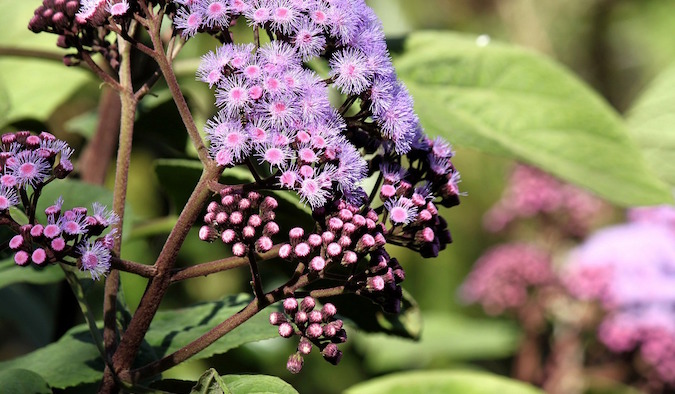
Purple flowers from the Sydney Botanical Gardens in the city
You’ll find Australia’s first vegetable garden and a treasure trove of trees, ferns, flowers, and gardens at the Royal Botanic Gardens. On a sunny day, you’ll find locals sprawled out all over the lawns soaking up the sun. You can also see Mrs. Macquarie’s Chair, a seat carved into a stone cliff, where you can sit and gaze out at the harbor. There are also free one-hour volunteer-guided tours of the garden, too!

4. Take the ferry to Manly Beach
The ferry ride to Manly ($12.40 AUD round-trip, $2.50 AUD on Sundays) offers sweeping views of the harbor, Sydney Harbour Bridge, and the world-famous Opera House. It’s a picturesque 30-minute ride each way that puts you in one of the coolest parts of the north end of the city. Manly is famous for its wide beach, giant waves, surfing, and kick-ass nightlife.

5. Walk the Sydney Harbour Bridge
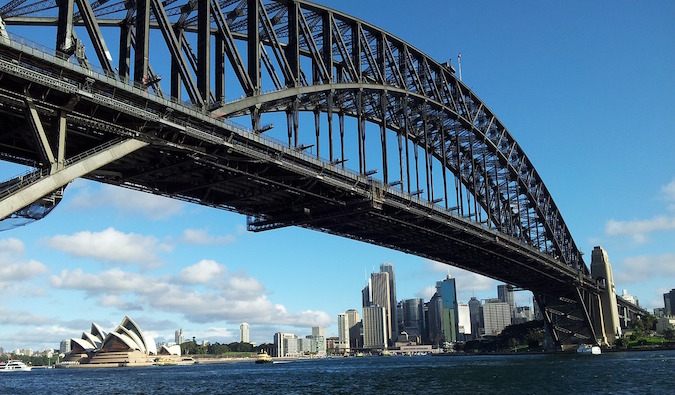
Great angle of the Harbour/Harbor Bridge in Syndey Aussie
The bridge was built in 1932 as a government employment project during the Great Depression. Its steel frame has become an iconic symbol of the city. While tours that climb the bridge are expensive ($158 AUD), it is free to walk or bike across it for panoramic views of the harbor and Opera House.

6. Marvel at the Sydney Opera House
Famous landmark Sydney Opera House lit up at night
Just as iconic as the Sydney Harbour Bridge, the Opera House is famous for its white-shelled roof. As an architectural delight and feat of engineering (getting the roof to stay up took the creation of a complex support system), guided tours ($37 AUD) give you a whole new appreciation for just how challenging the building was to design and erect. Tickets for a show in the Opera House are surprisingly affordable ($43 AUD), so try to take one in if you can.

7. Visit the Blue Mountains
The three sisters in the Blue Mountains of Australia with blue sky and lush background
Over the millennia, the ancient sandstone of this national park has been weathered into gorges lined by steep cliffs and separated by narrow ridges. Some activities in Blue Mountains National Park include seeing the magnificent rock formation of the Three Sisters (particularly stunning at sunset and under evening floodlights) or hiking along the paths that offer excellent views of the valley, sheer rock walls, tumbling waterfalls, and magnificent forests. The park is free to visit and you can get there by train from Sydney, which takes 90 minutes. If you want to hike further afield, it’s best to stay overnight!

8. See all the museums
Museum of Contemporary Art in Sydney, Australia
Like most cities, Sydney has a wide variety of museums. There’s free entry to the Art Gallery of New South Wales (modern art), the Museum of Contemporary Art Australia at The Rocks, the Nicholson Museum (antiquities), and the Australian National Maritime Museum at Darling Harbor. I also suggest visiting the White Rabbit Gallery (contemporary Chinese art; it also has a teahouse) and The Rocks Discovery Museum (local history); both are also free. However, my favorite museum of all is the Hyde Park Barracks. Set in the old convict barracks, it does an amazing and detailed job of chronicling colonial life in the city, with lots of stories of the early settlers, and it’s well worth the $10 AUD entrance fee. If you only pay for one museum, make it this one!

9. Learn to surf
Surfers walking down the beach at sunset with their surfboards
Sydney is often the place travelers bite the bullet and learn the art of Australia’s famous national pastime. There are many companies here that offer lessons. While Bondi is the most popular beach, Manly on the north shore of Sydney has better waves (though you can find good waves up and down the coast!).

10. Wine Tasting in the Hunter Valley
North of town is one of Australia’s premier wine regions. The Hunter Valley is home to amazing wineries that produce luscious reds. While it’s not as easy on the budget, it is an excuse to get out of the city and see the countryside. Day tours are offered from Sydney, but they are expensive ($150-200 AUD) and you spend a lot of time in the bus. Want even more fun? Try a bike tour. Grapemobile and Hunter Valley Cycling offer one-day bicycle rentals starting at $35 AUD. It’s best to stay for at least a night to get the full experience.

11. Take the Sydney Tower Skywalk
Sydney Tower Skywalk photo against a blue sky
As tall as the Eiffel Tower and twice as high as the Harbour Bridge, the Sydney Tower offers amazing panoramic views of the city from its Skywalk at the top. At $50 AUD, it’s cheaper and easier than climbing the bridge itself, and the views are actually far better. Also included with your purchase of a Skywalk ticket is access to the “4-D” cinema experience, which includes in-theatre effects like wind and fire.

12. Walk one of the coastal walks
Coast of Australia with rocks and clear blue water
There are a number of stunning coastal walks that allow you to take in the breathtaking natural beauty of Sydney Harbor. While tons of people follow the two-hour Coogee-to-Bondi walk (skip the weekends when it’s overly crowded), I found both the shorter walk in Watson’s Bay and the Split-to-Manly walk quieter and more breathtaking.

13. Explore the markets
Sydney has many amazing markets to walk through. At Paddington Markets (Oxford Street; open Saturdays after 10am), the fish market (Bank Street and Pyrmont Bridge Road), Bondi Farmers Market (Campbell Parade on Bondi Beach), the flower market (Parramatta Road), and a whole lot more seasonal markets, it’s really easy to spend a lot of time wandering and shopping. I love Paddington Markets and the farmers market the best — they draw an eclectic crowd, and the farmers market makes me want to cook nonstop.

14. Attend a cultural event
Vivid Sydney light up cultural festival
Since Sydney has a complex about Melbourne being called the culture capital of Australia, it tries to outdo its rival by hosting over 30 official festivals and events each year. It offers art gallery nights, concerts, festivals, and much more. Most of them are free and can be found on the Sydney tourism website.

15. Party in King’s Cross
If you’re looking to go out and get wild on the cheap, then go to King’s Cross. This is where the beer is inexpensive and the backpackers (and locals) party late. The famous World Bar is where most of the action happens (cheap drinks and a large dance floor). For a less traveler-centric time, head to Manly, The Rocks, or the CBD (central business district) where there are more locals and less travelers (but more expensive cocktails and beers).

****

Sydney is a remarkable city. While some cities scream “run around and see stuff” (cough, NYC, cough), Sydney’s message to visitors is always “relax, go outside, and enjoy the beautiful weather.” Sure, there’s plenty to do, but I find the best way to enjoy the city is to take it slow, see a few attractions, and mostly lay outside on the beach or in a park… or relax at a nice happy hour at a bar overlooking the harbor! Sydney has it all!

Book Your Trip to Australia: Logistical Tips and Tricks

Book Your Flight
Find a cheap flight by using Skyscanner or Momondo. They are my two favorite search engines because they search websites and airlines around the globe so you always know no stone is left unturned.

Book Your Accommodation
You can book your hostel with Hostelworld. If you want to stay elsewhere, use Booking.com as they consistently return the cheapest rates for guesthouses and cheap hotels. I use them all the time.

Don’t Forget Travel Insurance
Travel insurance will protect you against illness, injury, theft, and cancellations. It’s comprehensive protection in case anything goes wrong. I never go on a trip without it as I’ve had to use it many times in the past. I’ve been using World Nomads for ten years. My favorite companies that offer the best service and value are:

Looking for the best companies to save money with?
Check out my resource page for the best companies to use when you travel! I list all the ones I use to save money when I travel – and I think will help you too!

Want More Information on Australia?
Be sure to visit our robust destination guide on Australia for even more planning tips!

Photo credit: 1, 2, 3, 4, 5, 6, 7, 8, 9, 10, 11

The post My 15 Favorite Things to Do in Sydney appeared first on Nomadic Matt's Travel Site.

How Much a Holiday in Thailand Costs

Ruins and a statue in Sukkothai, Thailand
Updated: 10/28/2018 | October 28th, 2018

Traveling Thailand can cost as little or as much as you want it to be. This is a country that covers all budgets! This is a country where you can stay in $3 USD rooms or $1,000 USD resorts. Street food for pennies or gourmet dinners for hundreds. Expensive tours or inexperience attractions.

There’s something for every budget here in Thailand.

Thailand is a cheap country to live in and travel around. I usually spend very little money here. But that changed when my friends came, and why that changed is important for anyone planning to come to Thailand.

How much does it cost to travel around Thailand?

Your Thailand costs will vary greatly depending on the kind of traveler you want to be. I’ve been visiting the country for over a decade and I’ve seen it change a lot. Here’s how much you can expect to spend and how to save money in the country.

How Much Does it Cost to Visit Thailand?

On a recent visit to Thailand with my friends, we traveled for 24 days and I spent $1,596.27 USD or $66.51 per day. Here’s the breakdown (all prices are in Thai baht):

  • Accommodation (cheap guesthouses, nice beach bungalows, luxury jungle huts) – 13,565
  • Flights around Thailand – 4,200
  • Transportation (public buses, trains, taxis) – 1,470
  • Ferry to, around, and from the islands – 1,875
  • Diving in Ko Tao – 800
  • Hiking in Khao Sok – 1,200
  • Movie and popcorn (Sherlock Holmes 2—don’t see it!) – 320
  • Misc. (bug spray, toothbrush, etc.) – 363
  • Drinks (it was the holidays!) – 10,115
  • Jim Thompson House (museum in Bangkok) – 100
  • Medicine (I popped my eardrum scuba diving!) – 1,890
  • Food (street food, seafood dinners, amazing international meals in Bangkok) – 11,000
  • Web stuff for work – 890
  • Water – 100

Total spent: 47,888 THB or $1,596.27 USD

Note: 1 USD = 30 THB

For Thailand, that’s a lot of money. But my friends had never been to the country before so we traveled a little faster than normal and stayed at nice placer than I normally would on a budget.

I love traveling Thailand because it’s cheap and backpacking around Thailand usually costs $30–35 USD per day, depending on how much alcohol you consume and how many days you spend on the islands, where costs are higher.

But when time’s limited and this is one of two big trips all year, you don’t want to scrape every penny. Vacations don’t need to cost a fortune, but if you aren’t traveling all the time, staying in the cheapest place to make your money last becomes less of an issue. You want nice things.

You travel faster. You take planes, not 12-hour trains. You cram more activities into your day. You pamper yourself more. You eat nicer meals.

And my friends definitely wanted all of the above.

How Much Do You Need to Travel Thailand?

Beaches near Ko Lipe, Thailand
You don’t need to spend a lot of money in Thailand.

If you’re backpacking Thailand, plan to budget between 825–1150 BHT ($25–35 USD) per day. This range will get you your own room (fan only) with a shared bathroom (or a dorm room on the lower end), food from the street stalls, a couple of drinks per day, a few tours here and there, and local transportation. If you’re spending more time on the islands where things tend to be more expensive, budget towards the higher end or even upwards of $40 a day.

On a budget of around 1,650 baht ($50 USD) per day, you would be able to fly between some destinations, eat more delicious seafood dinners and international meals, take more tours and activities you wanted, sleep in air-conditioned rooms, and drink more.

If you’re looking to stay in Western hotels or expensive resorts, eat mostly Western food or in tourist areas, drink a lot, do a lot of tours, and fly a lot, you should budget 3,300–5,000 baht ($100–150 USD) per day. After that, the sky is the limit.

Throw in some extra money for shopping, and a maximum of $55 USD per day would give you a very, very nice budget vacation in Thailand. For that price, you would get:

  • Flights (so you don’t have to spend time on long bus rides)
  • Meals that include local restaurants and cheap street food, as well as delicious seafood dinners and some delicious international food in Bangkok
  • Budget guesthouses with a few “splurge” nights thrown in
  • Some tours and activities
  • A few drinks
  • A little extra wiggle room just in case

While all the money-saving tips mentioned on my website can be applied to any style of trip (saving money is universal), how fast you travel on a vacation changes how you spend money. We could have saved a lot if we’d skipped the flights and taken the train, but my friends didn’t have the time to spend 12 hours on a train. We flew, which is expensive during peak season.

How to Save Money and Lower Your Thailand Costs

A river in Khao Sok
Thailand is an inexpensive country, but if you’re on a really tight budget and need to lower your costs here’s how to save even more money during your visit:

  • Get off of the tourist trail – The easiest way to save money in Thailand is to live like a local. Take the local buses, eat street food instead of standard restaurant food, and drink beer instead of other (more expensive) alcohol. In Bangkok, average Thai citizens live on a less than 8,000 THB per month. In the countryside, the average person lives on even less. Try to follow their example. Visit less touristy cities and islands, and you’ll save big.
  • Book tours when you arrive – Want to take a cooking class, try zip-lining, or head out on a jungle trek? Maybe you want to try scuba diving near the islands. No matter what you’re looking to do, wait until you get into Thailand to book. Travel agencies are located everywhere so they are easy to find. These people are extremely friendly and easy to negotiate with, too. When it comes to tours, the general rule is that the more you buy, the better discount you can get. Grab a group of friends and sign up for tours together to increase your discounts. If the first travel agent won’t negotiate with you, move on to another one. Sure, you could just purchase these tours online before you arrive, but you’ll be paying a lot more. Wait until you arrive and you’ll save a lot of money.
  • Eat at the street stalls – Everyone agrees that the food from street vendors in Thailand is the best food in the country. Plus, it’s ridiculously cheap. You can easily find a bowl of soup or noodles for less than 30 THB. Street stalls line every block, making them a simple and cheap option for any meal.
  • Skip the Western food – Western food venues are always more expensive when compared to Thai food. Since some of the ingredients need to be imported, you should expect the prices to be higher than any Thai food you’ll find. Since most Western food places also pale in comparison to its original, it’s best to just skip it altogether and enjoy the delicious local food.
  • Negotiate with tuk-tuk drivers – Unlike taxis, the tuk-tuks do not have meters. This means you need to agree on a price before you take off. If you don’t, they’ll be able to jack up the price on you. Drivers are always friendly but if you’re going to act like a clueless tourist they will definitely take advantage of you and charge you a few extra bucks. While I generally try to avoid tuk-tuks, they are fine for short distances (and you need to try them at least once!).
  • Limit your drinking – You can save a lot of money by limiting how much alcohol you drink. Alcohol in Thailand can be quite expensive, so go for water if you’re on a budget. If you are going to drink, be sure to take advantage of happy hour deals when you can, and stick to beer instead of cocktails. o save even more money, buy your beer at 7-Eleven as it will be much cheaper than the bar.
  • Use a hospitality exchange website – Sharing economy platforms like Couchsurfing and BeWelcome allow you to stay with locals for free while giving you a local perspective on the destination. There are plenty of hosts here, both locals and expats, so be sure to check out to not only save money but get an insider experience.
  • Bargain hard – When you head to the markets you’re going to have to bargain hard. Never take the first price and don’t be afraid to walk away if you feel like you’re getting ripped off. If you can, ask a local what prices you should expect to give you a point of reference. Just remember to bargain hard but don’t be a jerk!
***

In the rush to see everything, you can spend a lot of money before you even realize it. I’ll admit that the budget traveler I normally go out the door on this trip. I would normally never fly around Thailand, skip the expensive resorts, and not eat as much international food as I did with my friends.

A three-week vacation in Thailand might not be as cheap as a three-month backpacking trip, but it can still be inexpensive as long as you watch where your money goes and don’t forget about keeping to a budget in your quest to see everything. Thailand doesn’t need to cost a fortune though and if you use these tips when you travel, no matter your travel style, you’ll save money!


Get the In-Depth Budget Guide to Thailand!

Thailand travel guideMy detailed, 170+ page guidebook is made for budget travelers like you! It cuts out the fluff found in other guidebooks and gets straight to the practical information you need to travel and save money while in Thailand, a country I used to call home (so I know it really well!). You’ll find suggested itineraries, budgets, ways to save money, on and off the beaten path things to see and do, non-touristy restaurants, markets, and bars, and much more!! Click here to learn more and get started.

Book Your Trip to Thailand: Logistical Tips and Tricks

Book Your Flight
Find a cheap flight by using Skyscanner or Momondo. They are my two favorite search engines because they search websites and airlines around the globe so you always know no stone is left unturned.

Book Your Accommodation
You can book your hostel with Hostelworld. If you want to stay elsewhere, use Booking.com as they consistently return the cheapest rates for guesthouses and cheap hotels. I use them all the time.

Don’t Forget Travel Insurance
Travel insurance will protect you against illness, injury, theft, and cancellations. It’s comprehensive protection in case anything goes wrong. I never go on a trip without it as I’ve had to use it many times in the past. I’ve been using World Nomads for ten years. My favorite companies that offer the best service and value are:

Looking for the best companies to save money with?
Check out my resource page for the best companies to use when you travel! I list all the ones I use to save money when I travel – and I think will help you too!

The post How Much a Holiday in Thailand Costs appeared first on Nomadic Matt's Travel Site.

Friday, 26 October 2018

System 001: An Innovative Design to Remove Plastic From the Ocean has Been Deployed off the Coast of California

Founded in 2013 by 18-year-old (at the time) inventor Boyan Slat, The Ocean Cleanup is a nonprofit organization that’s working to clean up our oceans by removing plastic. After five years of rigorous design and testing, the Cleanup’s cleaning apparatus, called System 001, has been deployed off the coast of California.

System 001 is a passive collection apparatus that works by moving in tandem with the ocean’s currents, taking advantage of the water’s circular movement patterns, called gyres, that cause the trash to accumulate in the first place. The Ocean Cleanup points out that 92% of the debris in the Patch is still large enough to be collected using the System’s large suspended net, and it’s critical to remove this plastic now before it degrades into microplastics that enter the food chain. Because of the net’s passive, slow-moving design, the group has reported that it has not caused animals to get caught, presumably because they have sufficient time and space to navigate away from the debris-funneling nets.

While the organization has global aspirations and an international team (the founder is Dutch), their first focus is on the massive Pacific Garbage Patch, which floats in the ocean between California and Hawaii. The Pacific Garbage Patch is the largest aquatic aggregation of trash in the world, first recognized thirty years ago. It is estimated to contain about 80,000 metric tons of garbage spanning 5.2 billion square feet (nearly a million square miles). Ocean Cleanup’s boat, the Maersk Launcher, towed the System 1,200 miles from Alameda to begin its work.

You can see a live update of the System’s location and learn more about The Ocean Cleanup on the organization’s website, as well as on Twitter and Instagram.


My Ultimate Guide to Sri Lanka: Tips, Costs, Itineraries, and Favorites

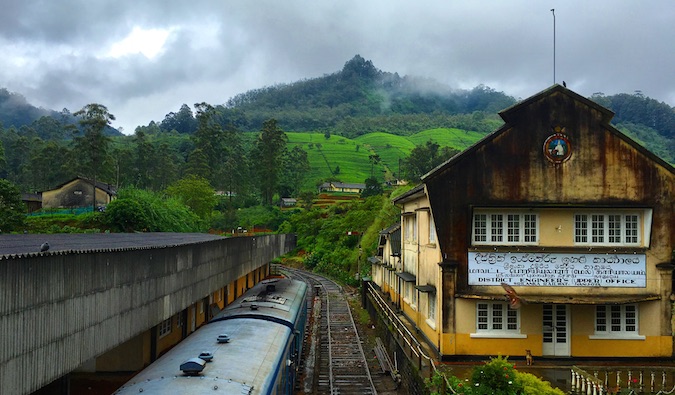
train station in sri lanka
Updated: 10/26/2018 | October 26th, 2018

My visit to Sri Lanka — a jewel–shaped country in the Indian Ocean — was an unexpected surprise. I didn’t have a lot of expectations for the trip. But it turned out to be an amazing experience. I loved every bit of Sri Lanka: the verdant landscape, the delicious food; the crumbling, overgrown ruins; the abundant wildlife; and (especially) the welcoming locals who took hospitality to the next level.

Traveling Sri Lanka is a relatively easy thing to do. It can be a little chaotic, with overcrowded buses moving along clogged roads where lanes are mere suggestions, and trains packed to the gills with people hanging off the edges (which actually is kind of fun). But English is widely spoken so once you get used the chaos, it isn’t too difficult to get around.

But there are a few things you should know before you visit Sri Lanka to avoid getting scammed, overspending, and, like me, missing some of the scenic trains! Here’s my guide to visiting Sri Lanka:

Sri Lanka Travel Guide: 14 Important Tips to Know for Your Visit

Travel Tip #1: Don’t drink the water – You shouldn’t really drink the water in Sri Lanka, so bring a reusable water bottle with a purifier. It’s really hot, so to keep hydrated, you’d probably spend 300 rupees ($2 USD) per day on plastic bottles of water at 60 rupees ($0.40 USD) each. But a water bottle with a purifier costs just $20 USD (though my preferred brand Lifestraw is slightly more). Over the course of a two-week trip, that’s an $8 USD savings (and you help the environment too)!

Travel Tip #2: Eat the local food– Outside of the major cities of Colombo and Kandy, you won’t find many non-Sri Lankan or non-Indian food options. What you do find is a poor excuse for Western food that is overpriced and often a chain. Stick to the local food! It’s super delicious. I never knew much about Sri Lankan food before hand but now I’m hooked! Just eat it all! Balaji Dosai in Kandy; Ahinsa in Sigiriya; Upali’s in Colombo; Hot Hut in Nuwara Eliya; and the restaurants across from the bus station in Anuradhapura were some of my favorite.

Travel Tip #3: More about food– Food, besides being crazy good, is also really cheap in Sri Lanka! Local food costs about $1-3 USD per meal for simple dishes of dosas (a kind of pancake), kottu (a dish made of roti (flatbread), vegetables, egg and/or meat, and spices), rice, chicken, and everything in between. At restaurants with table service, you’ll pay closer to $5 USD.

Travel Tip #4: Sri Lanka isn’t a party– Don’t expect too many chances to drink alcohol. Outside the coastal tourist towns and the capital of Colombo, there isn’t much nightlife or opportunities to drink. While you can always crack a beer at your guesthouse, Sri Lanka isn’t home to a big drinking/nightlife culture. Expect your nights to be tame.

Travel Tip #5: Hire the Tuk-tuks– You can hire drivers cheaply. Any tuk-tuk driver will let you hire them for the day. Expect to pay around $20 USD for the day. Moreover, tuk-tuk drivers are pretty honest, except in Colombo, where they will try to scam and overcharge you. Elsewhere in the country, you’ll get a fair deal. There’s no need to try to bargain hard.

Travel Tip #6: Take the airport bus – There is a train to the airport you can take from Colombo Fort. It’s the cheapest way to get there, at 30 rupees ($0.20 USD). A tuk-tuk ride is about 2,500 rupees ($17 USD), and buses to the airport cost 110 rupees ($0.75 USD) and leave about every 30 minutes from Colombo Central Bus Station or Mawatha Bus Station.

Travel Tip #7: Travel by train: Train travel, while often slower, are the cheapest way to get around. Some typical routes: Colombo to Jaffna is 150-445 rupees ($1-3 USD), Jaffna to Anuradhapura is 150-295 rupees ($1-2 USD), Kandy to Nuwara Eliya is 85-280 rupees ($0.60-1.90 USD), and Colombo to Galle is 150-295 rupees ($1-2 USD).

Travel Tip #8: Book your train in advance: If you are taking the scenic train from Kandy to Nuwara Eliya or Ella (or vice versa) and want a seat, book it in advance through a travel agency, as tickets can’t be booked in person at the station unless it’s done four days before departure. You can always (and only) get a cramped second-class ticket (where you’ll learn the new meaning of a tight squeeze) on the day of departure. Many people will tell you to get to the station at 7am to buy a train ticket, but they don’t start selling them until 8am, so don’t listen to those people. Also, the concept of “sold out” doesn’t apply to “cattle class.”

Travel Tip 9: Show up early at Sigiriya: If you are visiting Sigiriya, get there when it opens at 8am to avoid huge lines and crowds at the site. If you are there after 10am, the crowds are so overwhelming it’s not worth visiting. It takes an hour to walk up as it’s single-file all the way!

Travel Tip 10: Skip the ticket line at Anuradhapura: If you are visiting Anuradhapura, tickets are $25 USD but are never checked unless you are entering the museum. (I also noticed Western tourists were the only ones ever asked to show a ticket at the museum.) Enter the site without paying by using the tiny road just southeast of the museum.

Travel Tip #11: Bring flip-flops to temples: You’ll have to take your socks and shoes off before visiting temples, even if they are outdoors, so bring flip-flops to keep your socks clean!

Travel Tip #12: Don’t expect high-end hostels: Hostels are really basic (fan, mosquito net, electric shower) but at $4-6 USD per dorm bed, you can’t go wrong.

Travel Tip #13: Day trip to Galle: Galle is only worth a day trip. Don’t stay over in the town. There is not much to do there at all.

Travel Tip #14: Find cheap accommodation: There are a lot of cheap accommodation throughout the country. You’ll usually get breakfast with your room too. Private rooms with your own bathroom start at $10 USD per night. Add $5 if you want air conditioning.

Visiting Sri Lanka: How Much Does it Cost?
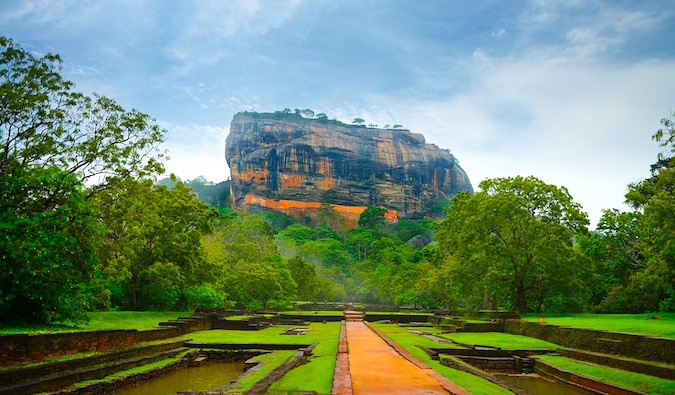
 Visiting Sigiriya Rock Fortress in Sri Lanka
Sri Lanka is a cheap country to visit. Even when you splurge, it’s not that expensive. Overall, I would say you couldn’t need more than a budget of $30 – 40 USD per day. The country is very cheap, especially if you stick to delicious local or Indian cuisine (the food is so cheap there’s no reason to grocery shop and cook your own meals), avoid the overpriced Western style restaurants (local food tastes much better anyways), travel second class and on buses, and don’t go crazy with the accommodation. Ever though I was on a budget, I didn’t go as low as I could (dorms every night, only Sri Lankan food, minimal activities, etc) and still found it was hard to break the bank. The expensive days in which I took a tour or decided to try some fancy restaurant were balanced out on the other days I didn’t.

Here is a list of prices to help you get an idea of costs in Sri Lanka:

  • Airport taxi – 2,500 rupees
  • National Museum in Colombo – 600 rupees
  • Train from Jaffna to Anuradhapura – 340 rupees
  • Bottle of water – 60 rupees
  • Bus from Anuradhapura to Dambulla – 340 rupees
  • Tuk-tuk from Dambulla to Sigiriya – 1,000 rupees
  • Kottu chicken (and water) – 370 rupees
  • Lunch 2 – 500 rupees
  • Tuk-tuk – 200 rupees
  • Bus from Dambulla to Kandy – 98 rupees
  • Hostel in Kandy – 600 rupees
  • Temple of the Tooth in Kandy – 1000 rupees
  • Dosai dinner in Kandy – 200 rupees
  • Train to Nuwara Eliya, second class – 160 rupees
  • Beer – 500 rupees
  • Bus to Tissamaharama (Tissa) – 240 rupees
  • Bus to Galle – 307rupees
  • Western lunch in Galle (burger and fries) – 1,200 rupees

What to See and Do in Sri Lanka: Itineraries By Region

 Wandering the Beautiful Jungles in Sri Lanka
Where should you go in Sri Lanka? Everywhere – if you have the time! Most travelers focus on the southern half of the country, with its hiking and beach towns. After decades of war, the north has a legacy of destruction that has yet to go away.

Though I originally had planned to explore only the south due to my limited time there, I was offered the opportunity to talk to a member of Parliament in Jaffna up north and learn about the Tamil war, so I rearranged my route thus:

Colombo – Jaffna – Anuradhapura – Sigiriya/Dambulla – Kandy – Nuwara Eliya –Tissamaharama (Tissa) – Galle – Colombo

I was glad I did. Seeing the north gave me an added perspective on a portion of the country without hordes of other tourists. In fact, in my time up north, I saw only four Westerners.

And though Sri Lanka may look like a small island, there is a lot to see and do there! More than I imagined. Anuradhapura and Sigiriya both have amazing ancient ruins. Kandy is filled with hiking treks, a big Buddhist temple, and a butterfly garden. Nuwara Eliya is known for its hiking, Tissa is the gateway to Yala National Park (which has elephants and leopards), and Galle is a beautiful old Dutch fort town.

beautiful view of a tower in galle, sri lanka
Even though I covered a lot of ground in my two weeks, I still missed many places, including Ella (more hiking), Arugam Bay (beaches), and most of the southern coast (more beaches and nightlife). I raced through the country and crammed too much into such a short period of time. I wouldn’t recommend going at such a breakneck pace.

Where should YOU go?

I would break your Sri Lanka travels into two parts — the north/center and the south — and focus on one of those regions. There’s simply too much to do in the country and travel (buses and trains) around the country is too slow to try to cover so much ground in a limited time.

Unless you have more time, then the world is your oyster!

Suggested Sri Lanka Itineraries

Southern Route (two weeks): Colombo – Hikkaduwa – Galle – Mirissa – Tangalle – Tissa – Ella – Nuwara Eliya – Kandy – Colombo

Northern Route (two weeks): Colombo – Nuwara Eliya – Ella – Kandy – Sigiriya – Anuradhapura – Trincomalee – Jaffna – Colombo

North and South (four weeks): Colombo – Jaffna – Trincomalee – Anuradhapura – Sigiriya – Kandy – Nuwara Eliya – Ella – Tissa – Tangalle – Mirissa – Galle – Hikkaduwa – Colombo

If you have a month, you could do this entire route plus add in the coastal towns of Arugam Bay and Negombo. With two weeks, focus on either the southern coast or the central/northern areas.

One thing to know is that once you’ve done the major things in a city, there’s very little reason to stay. For example, Tissa is the gateway to Yala National Park. Tour operators run most tours in the early morning (a higher chance of seeing animals) so if you took one of those tours, you could be on a bus moving on to your next destination by lunch time. There’s really not much else in the town. The same could with Jaffna. Tick a few boxes and then move on. Galle is more a day trip from a nearby beach town than a place to spend a few days. There was so little to do there I just went back to Colombo instead of staying the night. Sigiriya and Dambulla can be done in two nights (though I added an extra night because I liked the family I was staying with). Nuwara Eliya, Ella, Kandy, Arugam Bay, Trincomalee – those places have more activities and are worth spending a longer time in.

Where to Stay in Sri Lanka

For accommodation, I really liked the following places:

Where to Eat in Sri Lanka

For restaurants, besides the list above (item number 2(, I would also recommend the Ministry of Crab. It’s an expensive seafood restaurant in Colombo but it’s delicious! Sri Lankan crab is famous worldwide and they have gigantic ones. It’s not cheap but sometimes, you just have to treat yourself. While I didn’t go out much, if you find yourself in Kandy, the Slightly Chilled Bar is a popular meeting spot and has wonderful views of the city (and the sunset).

****

Sri Lanka is an easy country to visit, and with a few tips, you can travel there with ease. This is a very budget-friendly country, even if you go nuts on the attractions and tours. I didn’t spend a lot of money, averaging just $35 USD per day. (Any expensive days will be balanced out with the cheap days where you just walk around, hike, or sit on the beach!)

Looking at the map of Sri Lanka, you might say, “Oh, it’s not that big. I bet I can cover a lot of ground in a short period if time.” You could, but you won’t “see” much. It will be too much of a blur. There is a lot to see and do in Sri Lanka and it takes awhile to travel around. Don’t rush your trip.

Sri Lanka may be small but it packs a powerful punch. Take your time to see this land of jungles, waterfalls, monkeys, delicious food, and lovely people!

Book Your Trip to Sri Lanka: Logistical Tips and Tricks

Book Your Flight
Find a cheap flight by using Skyscanner or Momondo. They are my two favorite search engines because they search websites and airlines around the globe so you always know no stone is left unturned.

Book Your Accommodation
You can book your hostel with Hostelworld. If you want to stay elsewhere, use Booking.com as they consistently return the cheapest rates for guesthouses and cheap hotels. I use them all the time.

Don’t Forget Travel Insurance
Travel insurance will protect you against illness, injury, theft, and cancellations. It’s comprehensive protection in case anything goes wrong. I never go on a trip without it as I’ve had to use it many times in the past. I’ve been using World Nomads for ten years. My favorite companies that offer the best service and value are:

Looking for the best companies to save money with?
Check out my resource page for the best companies to use when you travel! I list all the ones I use to save money when I travel – and I think will help you too!

Photo Credit: 3, 4

The post My Ultimate Guide to Sri Lanka: Tips, Costs, Itineraries, and Favorites appeared first on Nomadic Matt's Travel Site.