Tuesday, 26 February 2019

Photographer Winnie Au Captures the Unique Personalities of Dogs Adorned in Sculptural ‘Cones of Shame’

Photographs © Winnie Au

Any person who’s been within shouting distance of a dog owner has probably heard the term “cone of shame,” a euphemism for the medically prescribed devices that dogs must sometimes wear. The cones, traditionally uncomfortable and made of stiff plastic, keeps dogs away from their post-surgery stitches or uncomfortable skin conditions.

Photographer and dog mom Winnie Au sought to flip the narrative on these puppy-eyes-inducing devices by showcasing dogs in a variety of delightfully frilly and fluffy cones. The photo series, Cone of Shame, complements each canine’s body type, fur, and personality with handcrafted cones by costume designer Marie-Yan Morvan.

Au shares with Colossal that the featured dogs were cast from all over New York, as she and Morvan sought to discover interesting looking dogs, and also match canines to pre-existing cone concepts. The pair worked collaboratively to draw from Au’s loose ideas like “sea urchin” or “cotton candy,” and homed in on feasible designs and materials. Textured cones were formed from feathers, egg shells, and straws, and sleek designs were made with faux flower petals and makeup application wedges.

“When I concepted this series, it was meant to be more abstract and less straightforward portraiture,” the photographer explains. “So when I looked at the dogs, I would look at their fur as one element, the backdrop color as another element, and then the cone style would be the final element. The goal was to put the pieces together like an abstract painting and make sure the colors and tones worked in symmetry with each other.”

Au has just released the “Cone of Shame” images in notecard format, as part of a Kickstarter campaign that supports Animal Haven’s Recovery Road fund. You can follow Winnie Au and Marie-Yan Morvan on Instagram.


Monday, 25 February 2019

Blue and White Greenhouse Illustrations Appear like Sun-Baked Cyanotypes

Portuguese artist Ana Frois uses her background in architecture to draft precise structures she fills with imaginative monochrome plants and miniature gardening accessories. The series, simply titled Greenhouses, is created with white pencil on top of deep blue acrylic on paper. The ghostly forms are reminiscent of a cyanotype or faded architectural sketch, as if the clean-cut floating renderings are memories from another time. You can find more of Frois’s drawings on Instagram, and purchase prints of her work on Etsy.

Bubbletecture: A New Book Explores Decades of Soft Architectural Forms and Inflatable Designs

Skum, Bjarke Ingels Group (BIG) (architect), Roskilde, Denmark, 2016. Picture credit: Rasmus Hjortshoj (pages 46-47)

Bubbletecture, a forthcoming book from Phaidon, captures the incredible range of inflatable architecture, fashion, art, and design that has been created over the last several decades. From chair-shaped balloon creations by Seung Jin Yang to a blow-up aubergine concert hall by Arata Isozaki (previously) and Anish Kapoor (previously), the included designs range from aesthetic interpretations of puffy inflatables to pieces that highlight their ease and functionality. The book, which was written by New York City-based architect Sharon Francis, presents more than 200 examples of shape-shifting designs dating back to the 1960s. You can discover more soft architecture forms and air-filled frocks by preordering the book on Amazon. (via Web Urbanist)

Eden Project, Grimshaw Architects (architect), Bodelva, Cornwall, UK, 2000. Picture credit: © Hufton + Crow (page 106)

Ark Nova, Arata Isozaki and Anish Kapoor (architect / artist), Matsushima, Japan (or elsewhere), 2013. Picture credit: The Asahi Shimbun via Getty Images (page 88)

Blowing Balloon Collection, Seung Jin Yang (designer), South Korea, 2015. Picture credit: Seungjin Yang (page 266)

Dactiloscopia Rosa, Plastique Fantastique (architect), Madrid, Spain, 2017. Picture credit: courtesy of Penique Productions (page 71)

Shelter, Leopold Banchini with Daniel Zamarbide (architect), Geneva, Switzerland, 2016. Picture credit: Dylan Perrenoud (page 41)

Drift, Snarkitecture (designer), Miami, Florida, USA, 2012. Picture credit: Markus Haugg (page 154)

RedBall Project, Kurt Perschke (artist), various, 2001—ongoing. Picture credit: Kurt Perschke (page 101)

Photographer Craig Burrows Reveals the Hidden Glow of Flowers and Plants Using the HP Zbook X2

Artist Craig Burrows (previously) captures the natural fluorescence of flowers using a unique UV imaging technique, resulting in spectacularly luminescent photographs. The process, known as ultraviolet-induced visible fluorescence photography, involves projecting electromagnetic radiation on to the flower, and then capturing the visible light briefly emitted by the plant. Lest you think everything around us is secretly glowing all the time, the light shown in Burrows’ photographs appears within nanoseconds of the UV light projection, and decays within ten nanoseconds. Objects that emit a longer afterglow are referred to as phosphorescent. The incredibly brief window of illumination is usually not observable to the human eye not because it is itself invisible, but because the glow is so brief, and generally surrounded by much more powerful, atmospheric sunlight.

To create his seemingly magical—but actually all-natural—photographs, Burrows first collects local flowers from his lush Southern California neighborhood, or purchases specific species he’s interested in experimenting with. He works with them in an extremely dark environment, to prevent any competing light from dulling the flowers’ glow, and places each stem in a stand that’s covered in light-absorbing matte black electrical tape. Burrows uses long exposures, and moves his UV-filtered LED evenly over each blossom to ensure that every petal, stamen, and pollen grain gets its moment in the spotlight. Despite all the technical details and varied equipment involved in each shoot, Burrows never knows how—or if—a photograph will turn out until he’s finished shooting.

The photographer, who credits Swedish artist Oleksandr Holovachov with his own inspiration for UVIVF, has been working in this mode for just four years, and has taught himself the intricate process. His work has paid off, with a recent feature in National Geographic. Considering Burrows’ unique perspective on blending art and science, we asked him to turn his precision-focused lens to the HP ZBook x2.

“Regarding the laptop, there are a lot of things I was pretty impressed with. For one thing, it’s got an aluminum and magnesium body and is made to meet MIL-STD-810G specs. This makes me feel comfortable bringing valuable equipment like the ZBook x2 with me—it really feels like a quality piece of hardware. I normally use a large laptop with a full-size keyboard, and I was pleasantly surprised by the detachable one for the ZBook x2. Once I got used to the Quick Keys, it was pretty sweet to use.”

“In actually using it, it was incredibly snappy—definitely one of the quickest laptops or computers I’ve had my hands on, including some workstation desktops I’ve used.  When it comes to navigating around large 16bit images, rendering a video from them, or creating a focus stack, that power and speed makes it a true delight to use.

“I work around a lot of people in the design industry and I kept getting compliments from everyone on the looks of the tablet. It looks confident and classy, and doesn’t sacrifice ports and functionality to make it happen. I will admit, I was pretty gleeful that I could use USB devices and SD cards without needing external dongles and adapters!”

“While it would certainly be of more use to an illustrator, I found the pen interface pretty excellent. My workflow for photo editing demands abundant keyboard shortcuts so I struggled with using it in pure tablet mode, but I found it quite adept for sketching and drawing. The fact that the tablet has the functionality of a Cintiq in a compact and portable form makes it extremely useful in photo-editing for both masking and making adjustments. The Zbook has definitely made me rethink what a laptop can be and changed my expectations.”

You can purchase prints of Burrows’ fluorescent flowers on his website, and follow him on Flickr and Instagram, where he shares interesting floral facts alongside his photography.

Learn more about the HP ZBook x2 at hp.com


Advertisement

What Does Globalization Really Destroy?

a McDonald's sign in the streets of a tourist area
Posted: 2/25/2019 | February 25th, 2019

While walking down the streets of Medellín, I came across a Dunkin’ Donuts, a donut chain from my hometown of Boston. (It’s the best. Locals are quite attached to Dunkin. Don’t mess with a Massachusetts resident and Dunkin.)

As I looked at the store, a pit formed in my stomach and I got quiet and melancholy.

For days, I had been coming across Starbucks, McDonald’s, KFC, Papa John’s, and now, Dunkin’ Donuts!

Medellín had been overrun by the chains.

Another place ruined by globalization!

Another place where the local character was dying.

Or…was it? (Said in a Morgan Freeman narrator voice.)

Was that Dunkin’ Donuts really a bad thing?

Or that Starbucks I saw earlier? Or all those Papa John’s? (I mean that garlic butter sauce is amazing.)

As I continued down the street, a thought struck me: What had that Dunkin’ Donuts really ruined?

I mean the shops and stalls nearby were still full of life and brimming with customers buying snacks and coffee.

What was really bothering me?

Then it hit me.

I realized that maybe why I got sad was because what Dunkin’ Donuts really had destroyed was not Medellin but what I thought Medellin was.

As travelers, I think we tend to hate “globalization” because we imagine places to be a certain way from books, movies, and our collective cultural consciousness.

We often have this image — based on no firsthand experience — of what a destination should be like and how the people should act. We imagine deserted beaches, or quaint cafés, or rustic old towns, or gritty, worn-down cities because we saw that in a movie or read a book ten years ago. I mean, most Americans still think Colombia is teeming with narcos or that Eastern Europe is still like it was the day after the Iron Curtain fell.

view of skyscrapers in Medellin from the hills

We want the places we visit to fit into the box we mentally created for them. We want our image of them validated.

I mean we in part travel for a sense of adventure and exoticness. To be explorers and find spots devoid of any outside influence.

Globalization stops all that from happening.

Suddenly, we’re walking down the street — and we see a part of home.

Our illusion – the myth we created about the destination we are in – is shattered.

“Well, there’s a Starbucks. The tourists are here. This place is ruined now.”

But is that really a bad thing?

When we imagine how someplace should be — like Thai islands with little huts and empty beaches, or rural villages filled with only local food and pushcart vendors — we seek to freeze the world (and often with an air of leftover colonialism).

We forget that places aren’t Disneyland and it’s not 100 years ago. Things change. Places develop, mature, and move on. The world around us hasn’t stood frozen in time to act like our theme park. (And this doesn’t even touch the tip of the iceberg around the colonialism / Western stereotypes associated with these ideas.)

Would I rather see the world full of mom-and-pop stores and no Dunkin’ Donuts in Medellín?

On the surface, yes.

But if I really think about it, that’s because I want to escape my home, not be reminded of it. It’s because I’d like the world to match the one I see in books and movies. It’s because no one is completely immune to the views I just talked about. I’ve created a castle in the sky that I don’t want to see destroyed.

But part of the art of discovery is having your preconceptions shattered.

For example, most Americans (and maybe even most people in the world) view Colombia as this remote jungle full of coffee, crime, fruit, and narcos roaming the street. It’s gritty and dangerous.

But Colombia is nothing like people think it is. Medellín has one of the best transportation systems I’ve ever seen outside Scandinavia, and Wi-Fi is everywhere. There’s also some incredible Michelin star–worthy gastronomy taking place here. Bogotá has world-class museums. Digital nomads flock there. The roads are stellar. Many young people speak English, they are educated, and they are very informed of world events.

a McDonald's sign in the streets of a tourist area

So, as Colombia sheds its narco past and embraces the world as much as the world embraces it, should we – I – be surprised that the guy riding in a little jeep is playing Taylor Swift, or that burgers and pizzas and gin and tonics are really popular? Should we be surprised that Colombians want a taste of the world too?

We often think of globalization as a one-way street, where the Western chains “invade” other countries. Our conversation in the West is always about how we’re ruining other places.

Yet these places don’t survive on tourist dollars alone. Locals do eat there. Who are we to tell them no?

And I often think about the reverse: when people from other non-Western cultures travel, do they have the same reaction?

Do Colombians travel somewhere and go, “Ugh, a mondongo place here? This place is ruined.”

Do Italians hate the sight of pizza on vacation?

Do the Japanese lament seeing sushi abroad?

I don’t want to see the golden arches next to the Pyramids, but is it so bad that there are some franchises in Egypt? Who are we to say, “Hey, you can’t have that. I want to imagine your country as this Arabian Nights fantasy! Get rid of that pizza place! Where are the guys on camels?”

Whether it’s a chain or just a type of cuisine, I don’t think the mingling of cultures is such a bad.

Globalization is not perfect. And, of course, its benefits aren’t balanced. People have written volumes on this subject. Let’s leave that aside. I’m not here to discuss that. I’m here to ponder globalization and our perceptions of it as travelers.

That Dunkin’ Donuts reminded me that the globalized world that allows me to be in Medellín also allows Colombians to access not only my culture but other cultures as well.

I think we need to stop viewing globalization through the myopic one-way lens of being a Western traveler.

Do we really want places to stay impoverished / secluded / unconnected so we can have an “authentic” experience based on some fantasy we have about a destination? Do we really not want the locals to experience pizza, or burgers, or Scotch, jazz music, or Thai pop, or anything else not local?

I don’t think we should look at globalization as causing a place to be “ruined.” Cultures are always in flux.

The same process that has brought unfamiliar cultures to us has also brought parts of our culture (among others) there.

When you have more cultures interacting with each other, you get to understand that everyone is a human being and shares the same wants and needs.

And I think that is something we should celebrate.

Matt’s note: Before everyone freaks out in the comments, let me be clear: I am not saying globalization is all rainbows and unicorns. There are a lot of problems with multi-national corporations, specifically, when it comes to taxes, labor, and how much money they keep in a country. There are also a lot of environmental and social problems related to outsourcing. Those are important social and economic issues that need to be addressed politically so that everyone can share the benefits of a more globalized world. I don’t deny there are problems. But this post is simply about looking at the issue from a traveler’s perspective.

Book Your Trip: Logistical Tips and Tricks

Book Your Flight
Find a cheap flight by using Skyscanner or Momondo. They are my two favorite search engines because they search websites and airlines around the globe so you always know no stone is left unturned.

Book Your Accommodation
You can book your hostel with Hostelworld as they have the largest inventory. If you want to stay somewhere other than a hotel, use Booking.com as they consistently return the cheapest rates for guesthouses and cheap hotels. I use them all the time.

Don’t Forget Travel Insurance
Travel insurance will protect you against illness, injury, theft, and cancellations. It’s comprehensive protection in case anything goes wrong. I never go on a trip without it as I’ve had to use it many times in the past. I’ve been using World Nomads for ten years. My favorite companies that offer the best service and value are:

Looking for the best companies to save money with?
Check out my resource page for the best companies to use when you travel! I list all the ones I use to save money when I travel – and I think will help you too!

The post What Does Globalization Really Destroy? appeared first on Nomadic Matt's Travel Site.

How to Get Around Thailand on the Cheap in 2019

a sunny beach view in Thailand framed with rocky outcrops
Posted: 2/25/2019 | February 25, 2019

Thailand is one of the most popular backpacker destinations in Southeast Asia.

It’s also my favorite.

Of course, I’m biased.

Thailand was where I decided to quit my job and travel the world. I lived there for two years. I ran tours there. I speak the language. I feel at home there.

But that aside, Thailand remains popular some thirty years after the first hippies arrived on the “banana pancake trail” for a simple reason: it’s awesome.

The succulent food, the warm people, the postcard-perfect beaches, the lush jungles, the hot weather — Thailand is simply a wonderful place.

That said, Thailand is also a pretty big country.

What’s the best way to get around Thailand?

Well, how you will get around Thailand depend greatly on how long you’re staying. You have options!

So what should you do?

Here’s a breakdown of the best ways to travel around Thailand (including travel times) regardless of budget or the length of your stay in the country:


Getting Around Thailand By Flying

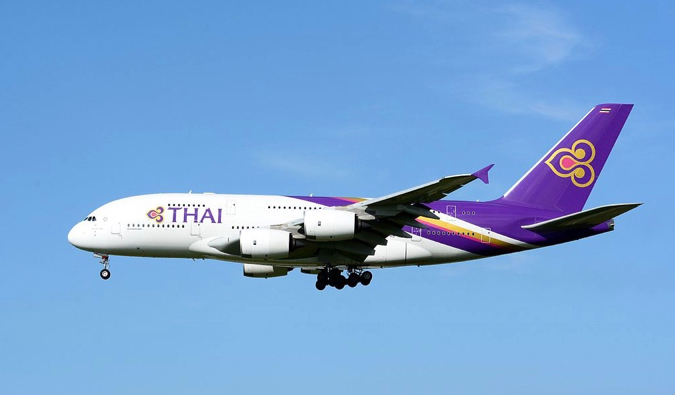
a Thai Airways plane taking off in Thailand
Flying is obviously the most expensive but quickest way to get around. You can get pretty much anywhere in the country in two hours or less, making flying the perfect choice for people who are rushed for time.

Thai Airways is the largest (and costliest) carrier, but there are numerous budget airlines, like Thai Smile, Bangkok Airways, Thai Lion, AirAsia, and Nok Air. But avoid some of the smaller budget airlines like Orient Thai, as their safety records are pretty spotty.

Flights around Thailand generally cost 1,400-6,600 THB ($44-200 USD). Flights to the islands tend to be costlier than those between large cities like Bangkok and Phuket. Flights to Ko Samui are always more expensive than anywhere else, thanks to monopoly pricing by Thai Airways and Bangkok Airways.

Here are some sample fares (as of February 2019) so you can get an idea of how much flights cost:

  • Bangkok to Chiang Mai – 780 THB/$25 USD (one way), 1,560 THB/$50 USD (round-trip)
  • Bangkok to Phuket – 735 THB/$30 USD (one way), 1,311 THB/$42 USD (round-trip)
  • Bangkok to Koh Samui – 3,715 THB/$119 USD (one way), 7,274 THB/$233 USD (round-trip)
  • Chiang Mai to Phuket – 1,561 THB/$50 USD (one way), 2,997 THB/$96 USD (round-trip)

If you book early, you can save on fares as the budget carriers usually offer around 30-50% off tickets when they have sales — and they always have sales (especially Air Asia).

Keep in mind that each airline has different baggage fees and policies – budget airlines typically charge extra for like credit card processing (the stupidest of all fees), baggage fees, and preferred seating.

Getting Around Thailand By Train

a busy train yard in Bangkok, Thailand
Thailand is one of the few countries in the region with a decent rail network. It covers 2,796 miles and is one of the best and cheapest ways to get around the country.

There are three classes of travel: first class is the most expensive and is available only on night trains. Second class is quite comfortable and has softer seats, as well as air-conditioned cars. Third class is bare-bones cars, with hard seats and no A/C. However, these are the cheapest seats around! (I actually like third class, though, as you meet more interesting people and there are always vendors coming on and off selling delicious and cheap food.)

Trains here move very, very slowly. The Chiang Mai-to-Bangkok night train — a distance of only 430 miles — takes 12 hours.

Day trains are even worse, as there are frequent stops and waiting at stations for reasons I’ve never figured out.

There’s no high-speed train in this country so don’t be in a rush if you’re traveling Thailand by train!

That said, I love traveling by train in Thailand if I’m not in a rush. The trains are spacious, there’s always food and drinks available, most of the cars have A/C, vendors get on and off at each stop to sell meals, fruit, or drinks, and the scenery as you cruise through the tropical countryside is out of this world.

It’s also crazy cheap, especially if you take the day train. Heck, even the night train is super cheap! Here are some example fares for both day and night trains:

  • Bangkok to Chiang Mai – 890 THB/$28 USD (day train), 1,011 THB/$32 USD (night train)
  • Bangkok to Chumphon – 550 THB/$17 USD (day train), 920 THB/$28 USD (night train)
  • Bangkok to Surat Thani – 858 THB/$26 USD (day train), 1,058 THB/$33 USD (night train)
  • Bangkok to Ayutthaya – 30 THB/$1 USD (day train)
  • Ayutthaya to Chiang Mai – 866 THB/$27 USD (day train), 1,131 THB/$35 USD (night train)
  • Ayutthaya to Lopburi – 30 THB/$1 USD (day train)
  • Bangkok to Korat (Nakhon Ratchasima) – 425 THB/$13.50 USD (day train), 1,010 THB/$32 USD (night train)
  • Korat (Nakhon Ratchasima) to Surin – 300 THB/$9.50 (day train)
  • Korat (Nakhon Ratchasima) to Ubon Ratchathani – 243 THB/$7.75 USD (day train), 593 THB/$19 USD (night train)

You can see train schedules and ticket prices on the State Railway of Thailand website (railway.co.th).

You can buy train tickets through a travel agent (there’s a slight upcharge) or directly at the train station. You can buy tickets the day of travel — there’s always space, especially on the day trains. That said, if you are looking for a bed on the night train, I would book at least three days in advance to ensure you have a reservation, especially during high season.

Getting Around Thailand By Bus

people aboard a crowded bus in Thailand with fans attached to the ceiling
As trains don’t go everywhere in Thailand, taking the bus is your second-best option. Actually, buses are the widest form of transportation here. You can go anywhere in Thailand by bus. Though they often show bad Thai movies with the sound turned up too loud and blast the A/C, they are a comfortable and spacious ride.

If you’re taking a day bus, note that they often stop in multiple towns along the way to pick people up and drop them off, and they also pick up people by the side of the road. Don’t expect to move in an efficient or quick manner. They aren’t in a rush.

Be sure to tell them exactly where you want to go, because often there are no signs when you pull into bus stations.

There are also “tourist buses” that, while more expensive, are usually a lot more convenient. They are usually best for long distances (they tend to travel at night), and when combined with island ferry tickets (say, Bangkok to Ko Phi Phi). They are more expensive than local buses, but they are more direct, and you don’t have to worry about where you are or if it’s your stop. They usually pick up in the tourist area and drop you off in the tourist area of the next place — plus there’s no stopping to pick up other people along the way.

You can book these via the many travel agents that line the tourist areas of town.

Here are some sample fares for bus routes in Thailand:

  • Bangkok to Chiang Mai – 534 THB/$17 USD (day bus), 830 THB/$26 USD (night bus)
  • Chiang Mai to Pai – 150 THB/$5 USD (day bus)
  • Chiang Mai to Chiang Rai – 229 THB/$7 USD (day bus), 312 THB/$10 USD (night bus)
  • Lampang to Chiang Rai – 237 THB/$7.50 USD (day bus)
  • Bangkok to Phuket City – 643 THB/$20 USD (day bus), 998 THB/$31 USD (night bus)
  • Bangkok to Chumphon – 373 THB/$12 USD (day bus), 427 THB/$13 USD (night bus)
  • Bangkok to Surat Thani – 858 THB/$27 USD (day bus), 1,058 THB/$33 USD (night bus)
  • Bangkok to Hua Hin – 289 THB/$9 USD (day bus), 400 THB/$12 USD (night bus)
  • Bangkok to Trat – 350 THB/$11 USD (day bus), 390 THB/$12 USD (night bus)
  • Korat (Nakhon Ratchasima) to Surin – 291 THB/$10 USD (day bus)
  • Surin to Ubon Ratchathani – 200 THB/$7 USD (day bus)

Getting Around Thailand By Car

gridlocked traffic in the streets of Bangkok's Chinatown
Don’t rent a car in Thailand. They are expensive, and the roads in Thailand are crazy.

It’s much better to rent a motorbike and ride across the country. It’s quite a common thing to do. This is a good article to help you plan a trip.

Getting Around Thailand By Ferry

a small shuttle boat in Thailand
While you won’t be using the ferry to get around Thailand, it will definitely be an important mode of transportation when you’re exploring the islands. Due to the well-established travel trail, booking your ferry ride is simple and straightforward – you can often book tickets online or just show up. Most hostels and hotels will be able to help you with this if you need assistance. They will also have the most up-to-date schedules.

Here are some example routes and fares to help you plan your trip:

  • Koh Tao to Koh Samui – 500 THB/$16 (one way)
  • Surat Thani to Koh Phangan – 625 THB/$20 (one way)
  • Phuket to Koh Phi Phi – 780 THB/$25 (one way)
  • Krabi to Koh Lanta – 550 THB/$17 (one way)

How Long Does It Take to Get Around Thailand?

Trying to figure out how long it will take you to get from point A to point B? Here is a distance and time chart so you can get an idea of how long it takes to get from place to place.

Route
Distance
(km/miles)
Air (hrs)
Bus (hrs)
Rail (hrs)
Bangkok –
Chiang Mai
230/115
1:15
10
13
Bangkok –
Phuket City
840/525
1:25
12
N/A
Bangkok –
Chumpon
466/290
1
8
8:15
Lampang –
Chiang Mai
99/61
4:05*
1:45
2
Surat Thani –
Bangkok
641/398
1
11
12
Chiang Mai –
Chiang Rai
199/124
4*
3:40
N/A
Ayutthaya –
Bangkok
81/50
N/A
1:30
2
Bangkok –
Koh Samui
763/474
1:15
13-14**
13-16**
Chaing Mai –
Krabi
1,465/910
4
27
24
Bangkok –
Ubon Ratchathani
609/378
2:30
10
11

*No direct flights.
**Includes ferry

What’s the Bottom Line on Getting Around Thailand?

Trains are the best way to get around Thailand cheaply and in comfort, night buses are great for places that aren’t serviced by the train, and if you’re short on time, just fly.

***

That’s it. These are the best ways to get around Thailand. It’s pretty easy, as visitors have been traveling around here for decades and there’s an extensive network to make sure you can get from A to B no matter what!

If you have any questions, leave them in the comments!

Updated! Nomadic Matt’s Guide to Thailand

Thailand Guidebook Nomadic Matt

Want to plan the perfect trip to Thailand? Check out my comprehensive guide to Thailand written for budget travelers like yourself! It cuts out the fluff found in other guides and gets straight to the practical information you need to travel and save money. My guide will help you with:

  • Budget advice from a budget travel expert
  • Suggested itineraries with maps to help save time planning
  • The best things to see and do (while avoiding tourist traps)
  • My favorite non-touristy restaurants and bars
  • Finding the best lodgings for your wallet, with advice from a professional budget traveler
  • Transportation advice that will show you the easiest and cheapest ways to get around
  • An extensive list of important information for travelers to this region
  • And much more!

>>> Download my guide to Thailand <<<</a>

Book Your Trip to Thailand: Logistical Tips and Tricks

Book Your Flight
Find a cheap flight by using Skyscanner or Momondo. They are my two favorite search engines, because they search websites and airlines around the globe so you always know no stone is being left unturned.

Book Your Accommodation
You can book your hostel with Hostelworld as they have the largest inventory. If you want to stay somewher eother than a hotel, use Booking.com, as they consistently return the cheapest rates for guesthouses and cheap hotels. I use them all the time.

Don’t Forget Travel Insurance
Travel insurance will protect you against illness, injury, theft, and cancellations. It’s comprehensive protection in case anything goes wrong. I never go on a trip without it, as I’ve had to use it many times in the past. I’ve been using World Nomads for ten years. My favorite companies that offer the best service and value are:

Looking for the best companies to save money with?
Check out my resource page for the best companies to use when you travel! I list all the ones I use to save money when I travel — and I think they will help you too!

Looking for more information on visiting Thailand?
Check out my in-depth destination guide to Thailand with more tips on what to see and do, costs, ways to save, and much, much more!

Photo Credit: 2

The post How to Get Around Thailand on the Cheap in 2019 appeared first on Nomadic Matt's Travel Site.

The Best Neighborhoods in London: Where to Stay When You Visit

a red London bus with Christmas lights at night
Posted: 2/25/2019 | February 25th, 2019

I’ve always liked London, but when I visited last year something in me just clicked—and poof! I finally saw the light and came to love it.

London has a million things to do to keep you busy a lifetime over. With its amazing architecture, world-class art museums, tons of historical sites, and unique shopping experiences, what’s not to love?

What’s not to love about a city where the pubs are so small everyone just stands on the street with their pint glass?!

And from its beautiful gardens to the excitement of Piccadilly Circus, there’s just an energy that can’t be beat.

But London is huge, containing more than 8 million people and 48 neighborhoods stretching over 607 square miles.

I mean it’s HUGE.

Any city that warrants a “I survived the subway” T-shirt usually is. Stay in the wrong neighborhood and you’ll spend hours on “the tube.”

So which are the best neighborhoods and places to stay when you visit London?

That depends on a lot of things (especially what your idea of fun is).

Each neighborhood has its own charm.

So I’ll break down the best neighborhoods and accommodations in London (for travelers, according to me):

The City of London

people walking around St. Paul's in London
This is technically the center of London (sometimes called “The Square Mile”), and it’s where the Romans set up a small military outpost named Londinium in 43 CE. You can still see evidence of the Romans here, including the crumbling wall on Tower Hill. Now, the area a financial district. There are several good markets here like Whitecross Street, with its large number of international food vendors; the Sunday Upmarket in the Old Truman Brewery for handmade crafts and clothing; and Leather Lane for a more traditional mix of everything from leather to tropical flowers. I like the history, quiet, and central location of this neighborhood.

Best Places to Stay in The City

  • BUDGET: YHA London St Paul’s – Opposite St. Paul’s Cathedral, this was once the school for the cathedral’s choirboys (you can actually still see some of their graffiti on the walls). There’s no kitchen on-site, but there is a small restaurant and bar. It’s not a party hostel, as families often stay here. So it’s ideal for a good night’s sleep.
  • MID-RANGE: Citadines Barbican London – Renovated in 2017, this hotel is comfortable, affordable, and close to the Barbican tube stop.. There are some really great restaurants nearby, like Tinseltown and Workshop Coffee, but there is also a small Sourced Market in the hotel for when you need to grab something to eat on the run.
  • LUXURY: Counting House – The Counting House is actually an iconic English pub with 15 large luxury rooms above it with the most comfortable beds you’ll ever sleep in (Egyptian cotton sheets!). Some rooms come with living rooms. A free hearty breakfast is included. This is a very traditional, posh British hotel!

Kensington/South Kensington

Kensington's mansion-lined streets
If you have come to London to soak up British history or to indulge your love for all things royal, this is the neighborhood to be. Kensington is where London’s Museum Quarter is, including the Victoria & Albert Museum, the Science Museum, and the Natural History Museum. It’s really close to Hyde Park and the regal Kensington Gardens. I love to stroll the neighborhood and gaze at the mansion-lined streets. It’s quiet, quant, and classically British.

Best Places to Stay in Kensington/South Kensington

  • BUDGET: Astor Hyde Park – This hostel is in a quiet neighborhood right off Hyde Park, and within walking distance to the Natural History and the Victoria & Albert Museums. There’s a great social vibe, and the friendly hotel staff will help you arrange tours and activities. Plus the £1 breakfast can’t be beat! I love the old wooden décor — you feel more like you’re in a home than a hostel. The dorms are huge and there’s plenty of room to sprawl out. Try to avoid the rooms on the upper floors, though, as the hostel has no elevator.
  • MID-RANGE: London Lodge Hotel – You can book single rooms in this bright Victorian townhouse, while the executive rooms have more floor space and larger bathrooms. The rooms are each uniquely decorated to make them feel more like a home with colorful patterned wallpaper and carpeting, and vintage furniture.
  • LUXURY: The Ampersand Hotel – The Ampersand is a luxury boutique hotel next to the South Kensington station. Each beautiful room has a different theme, like music or astronomy, and if you’re staying on the top floor, you get a great view over London. They do a posh afternoon tea in the drawing rooms and you can play ping-pong in the games room.

Mayfair

people with shopping bags walking around Mayfair
Mayfair is one of the wealthiest neighborhoods in London. Located between Hyde Park and the West End, it’s home to numerous five-star hotels, classy art galleries, and ultra-expensive shops but quiet at night. If you’re looking to stay in one of the city’s fancier and more beautiful neighborhoods, this is it!

Best Places to Stay in Mayfair

  • BUDGET: Mermaid Suite Hotel – There are no hostels in this neighborhood, but the Mermaid Suite Hotel on Oxford Street is one of the best affordable options. You’ll get a private room with an en suite bathroom, satellite TV, and tea and coffee. There’s also a free continental breakfast.
  • MID-RANGE: Mayfair Guesthouse – Although all the rooms in this guesthouse are private and spacious (some have balconies), most of them come with shared bathrooms. It’s a really good value property for this part of town.
  • LUXURY: The Beaumont Hotel – Walking into the lobby is like stepping back into time. The walnut-paneled walls are covered in original classic paintings and photography, and all the rooms are art deco style with king-sized beds. The marble bathroom floors are heated. Take advantage of the sauna, steam room, fitness center, and hammam. If you’re going to treat yourself to dinner, try the fresh lobster at the Colony Grill. Or you can pretend it’s the 1920s and order a strong whiskey cocktail in the low light of Jimmy’s Bar.

Soho

busy Soho with a black cab and people in the street; photo by Pedro Szekely (flickr:@pedrosz)
Soho is one of London’s most vibrant neighborhoods. The former red-light district, Soho is home to hundreds of restaurants, pubs, stores, all-night coffee shops, and theaters. It’s eclectic and exciting, and London’s artistic community thrives here. I love Soho at night when the pubs here spill onto the street with folks having a pint after work. You’re a twenty minute walk from a lot of the main attractions (especially the theaters of the West End). This is one of my favorite neighborhoods in the city.

Best Places to Stay in Soho

  • BUDGET: SoHostel – This large hostel (I kept getting lost in the hallways) has a rooftop “tiki”-style bar, nightly drink specials, quiz nights, live music, and karaoke. It also has a big common space with a restaurant with cheap food (like £5 pizzas) and beer. The beds are comfy, and the showers super clean. It’s one of the best hostels in London. If you book directly with them, they often have special rates.
  • MID-RANGE: Mimi’s Hotel Soho – Mimi’s is a newer hotel, and its affordability is based on its tiny rooms. They come in “tiny,” “mini,” cozy,” and “lux,” but even the lux rooms are pretty small. On the other hand, there’s floor heating, specially filtered water, and really nice marble bathrooms. The hotel’s on-street bar, Henson’s, gets really busy at night.
  • LUXURY: The Soho Hotel – No two guestrooms are the same at the Soho Hotel; they’re also enormous and most have floor-to-ceiling windows. There’s a well-equipped gym and even a personal trainer on-site, but if you’d rather take a book to the cozy library and read, you can do that too. There are tons of restaurants, bars, cafés, and theaters surrounding the hotel, and Oxford and Regent Streets are both just a quick walk away.

Covent Garden

colorful store fronts in Covent Garden; photo by Francisco Antunes (flickr:@francisco-antunes)
Covent Garden is just east of Soho. This is the theater district and is also known for its historic indoor market and throngs of tourists. There are plenty of street performers and lots of shopping opportunities. But it’s also a quirky neighborhood with cobblestone streets, cool shops, restaurants, and a historic square. It’s also very central.

Best Places to Stay in Covent Garden

  • BUDGET: Astor Museum Inn – Like the Astor Hyde Park, the dorms rooms here are pretty basic, but they aren’t overpriced, are clean, and there’s a cozy lounge and kitchen. Free dinners are also offered frequently. It’s not as quaint as the Hyde Park branch, but it is a better location.
  • MID-RANGE: Strand Palace Hotel – This hotel has been around since the early 1900s, and all its rooms are built around six inner courtyards. If you want a quiet space, ask for a room overlooking the interior. There are single-room options too, if you’re traveling solo and don’t mind a small space.
  • LUXURY: Fielding Hotel – The Fielding Hotel is named for author Henry Fielding, and in keeping with the period, the building has a lot of 19th-century charm. The rooms are tiny, but they come equipped with large TVs and tea and coffee facilities, and some even have claw-foot bathtubs. The hotel is located across from the Royal Opera House and just five minutes from the famous Covent Garden Market.

Shoreditch/Spitalfields

graffiti on a building in Shoreditch, London
This artsy, hip neighborhood in East London is an up and coming neighborhood filled with outdoor markets, vintage clothing stores, bars, and restaurants, and it’s one of the best nightlife districts in town. The abundance of street art contrasts old industrial warehouses and dimly lit streets. Thanks to the immigrant influence here, you’re never too far from a döner kebab or a plate of Peruvian ceviche.

Best Places to Stay in Shoreditch/Spitalfields

  • BUDGET: The Dictionary – The hostel itself has a great rooftop terrace, a bar for drinks, and free breakfast. There’s a big kitchen in case you want to cook too. The rooms are bare, but they’re spacious, and kept clean, and the beds are fairly comfortable.
  • MID-RANGE: Brick Lane Hotel – This offers basic but very clean accommodations, including single, double, and triple rooms with en suite bathrooms. Each room has a tea and coffee station and a desk. There are only eight rooms total, so you’ll get to know your hosts quite well. The onsite Sheraz Bangla Lounge serves cheap curry and is a local neighborhood favorite, so be sure to eat here at least once!
  • LUXURY: The Curtain – Every nook of this hotel has some sort of quirky design touch, whether it’s contemporary artwork or a wall-mounted stag. The rooms are spacious and come with exposed brick walls, nice seating areas, and rainfall showers. There’s a small rooftop pool, and the fitness center has daily yoga and cycling classes.

King’s Cross/Camden

the crowded market around Camden, London
These two neighboring areas are especially popular with backpackers and young Londoners. King’s Cross has a lot of hostels, and the canal banks are full of warehouses that have been transformed into restaurants and bars. Camden has always been a hot spot for the alternative crowd. Like Shoreditch, it has a lot of vintage and unusual shops (like Cyberdog, the futuristic glow-in-the-dark shop that’s also part rave). The waterside Camden Lock Market is quite famous, and you’ll definitely find some treasures here.

Best Places to Stay in King’s Cross/Camden

  • BUDGET: Generator – This is Generator’s first hostel (it’s now a huge chain spread all over Europe), and it’s housed in an old police station. You can’t go wrong with this chain. Like most of their hostels, Generator London has lots of modern, upscale fixtures, a huge common area, a bar, and a restaurant (no common kitchen though). The beds are plush, but there are not many charging outlets, so you’ll have to fight for space. It’s a short walk from Regents Park, Covent Garden, and the British Museum.
  • MID-RANGE: Ambassadors Bloomsbury – The rooms here are simple here. The hotel makes really good use of its space. The beds are excellent, there are blackout curtains, and the showers have strong water pressure. The hotel does a simple afternoon tea too.
  • LUXURY: Great Northern Hotel – This luxury boutique hotel has been around since the 1850s. Each floor also has a pantry where you can get free snacks and treats, like home-cooked cakes, and plenty of tea and coffee. The rooms have high ceilings, walnut furniture, giant walk-in showers, and beds you’ll never want to leave.

Chelsea

people in the sunlight walking through Chelsea; Photo by Matt Lowe (flickr:@matt_lowe1)
Chelsea has a reputation as London’s most fashionable neighborhood. There are also some very picturesque hidden squares you can find with a little exploration, and the colorful buildings make for great photography. It’s located on the Thames, and Albert Bridge (reputably one of the “most romantic bridges in the world”) has beautiful views over London. Chelsea is pretty residential, but there are lots of galleries and shopping options!

Best Places to Stay in Chelsea

  • BUDGET: Acacia Hostel – The rooms are small and they don’t have much character, but there are no more than six beds in each dorm. There’s a well-equipped communal kitchen but you’ll get free continental breakfast. It’s quiet, clean, and the Chelsea Football Stadium is a short walk away.
  • MID-RANGE: Chelsea House Hotel – This 150-year-old Victorian hotel has maintained a lot of its original charm and makes for a relaxed stay right near Earl’s Court. The rooms are pretty dull, without any kind of artwork or design touches, but they’re comfortable and tidy. There’s also a free continental breakfast buffet.
  • LUXURY: Blakes Hotel – Each room is different: some have four-poster beds, or enormous chandeliers, or antique furniture. The bathrooms have heated floors and soaker bathtubs. It can be a little dark for some people — there are a lot of blacks and grays — but overall it has a romantic vibe. If the weather is nice you have to get a cocktail in The Courtyard garden – there’s a ton of graffiti art and even an installation of a giant zebra.

Southwark

a skyscraper and a cathedral in Southwark
This historic district on the south bank of the Thames has a lot going for it. Tourists flock to the neighborhood, as it is home to the Tate Modern and Shakespeare’s Globe Theatre. There are several food markets, but Borough Market is the best, especially for foodies. You can’t miss London’s tallest, most modern building, the Shard. Make sure to take a walk along the river, as it’s a scenic route that affords great views of the city skyline. You can cross back and forth the Thames via the Tower, Millennium, or London Bridges.

Best Places to Stay in Southwark

  • BUDGET: St. Christopher’s Inn at the Village – This hostel chain has eight London locations, but I like the Village venue the best — especially for being so near the Borough Market (an absolute haven for foodies). It’s also a short walk to the London Eye and Tower Bridge. This is a pretty big party place, with an outdoor terrace and a ton of social events to get you well acquainted with your fellow travelers, like regular beer pong nights and musical performances. It’s the first hostel in London to have cozy pod-style beds. They are actually super comfortable and provided one of the best sleeps I had in the city!
  • MID-RANGE: The Bridge Hotel – Near London South Bank University and the Tate Modern, the Bridge Hotel has a ton of value for money. The beds are big, the linens are soft, and the shower pressure is super strong. During the week, you can access the Fitness First gym. The hotel’s classic English pub is a really nice spot to hang out, especially when there are small musical acts.
  • LUXURY: H10 London Waterloo – The rooms here are bright and airy, with floor-to-ceiling windows and tons of natural light. There’s a lot of extra space, and the beds are really comfortable. Watching the sun go down from the rooftop Waterloo Sky Bar is a must-do, especially with a drink in hand. From here you can look out over the skyline and see the London Eye turning lazily in the distance.

Notting Hill

pastel colored homes with a vintage car in Notting Hill
This is a really unique neighborhood, with cobblestone streets, Victorian townhouses, and plenty of quaint charm. You’ll find shop after shop with walls lined with antiques, as well as street food vendors, mom-and-pop shops, and small cafés and pubs that serve up some delicious grub. Notting Hill is really stylish! Each Saturday, it hosts the country’s largest antiques market, Portobello Road Market.

Best Places to Stay in Notting Hill

  • BUDGET: Hostel One Notting Hill – This hostel is awesome. Guests get a free homemade dinner each night and can join in on organized activities (including drinking games). It’s a very social hostel with friendly staff and a good vibe. The rooms are a bit cramped and pillows a bit flat, but the vibe more than makes up for the beds! There are two locations (the other one is in Camden).
  • MID-RANGE: Notting Hill Hotel – Located on a calm, tree-lined street right by the Pembridge Square garden, this is a nice boutique retreat from the city. The rooms are clean and come with your usual hotel amenities, but they’re a little colorless. The staff here are also super friendly and helpful. There is a common room and a library, and you can rent bicycles from reception.
  • LUXURY: Portobello Hotel – You’ll wake up to the best breakfast ever: tea, coffee, cereal, pastries, meats, cheeses, fresh fruit…you name it! Some rooms have extra character, like round beds with feather toppers, or mattresses so high you need a set of stairs to climb in. Plus the staff brings a flask of hot chocolate to your room every night.

Clapham

shopfronts in Clapham, London; photo by Ewan Munro (flickr:@55935853@N00)
For a long time, Clapham was a rundown suburb of London but, in recent years, Clapham has turned into one of those up-and-coming districts with a constantly improving list of restaurants, nightclubs, music venues, specialty shops, and more. It’s now one of the hip places to live in the city, thanks in part to the cheap rent there! And, when the sun is out, head to the Clapham Common and join the other Londoners hanging out or picnicking on the grass.

Best Places to Stay in Clapham

  • BUDGET: PubLove The Crown – The main part of this hostel is actually its popular local pub that draws people from all over the neighborhood. The entire building was refurbished in 2018, so it’s a clean, fresh accommodation to lay your head after you have a few drinks at the bar. Each bed comes with individual sockets and security screens. You get discounts for food and drink as a guest.
  • MID-RANGE: The Gateway Hotel – Located two minutes from the South Clapham metro spot (and also near the Clapham Common), The Gateway Hotel offers basic accommodations in all its en suite rooms. Desks and coffee/tea are provided in your room. It’s a small hotel with just 20 rooms.
  • LUXURY: The Windmill on the Common – The Windmill is awesome. It’s housed in a 500-year-old British pub, with 42 individually designed boutique rooms. It’s also right on the Clapham Common. There’s a super cozy lounge with large sofas, a roaring fireplace, and even a friendly Bernese Mountain dog named Max. If you’re here on a Sunday, try their famous roast.

Paddington

the interior of famous Paddington Station, London; photo by xchrisinphilly5448 (Flickr:@chrisinphilly5448)
Paddington is a hub for independent markets and boutique shops, and there’s a café on every corner. Spend an afternoon strolling along Praed Street and you’ll have your souvenir shopping done in no time. There are also unlimited sidewalk menu boards advertising meal specials day and night. Plus, you can wander the streets and take in the classic Georgian architecture.

Best Places to Stay in Paddington

  • BUDGET: The Pride of Paddington – The Pride of Paddington has both private rooms and dorms with up to eight beds, including female-only dorms. The rooms and bathrooms are clean and tidy, but they lack a lot of personality, and there is no communal kitchen. You get a free English breakfast with your stay, and discounted deals on other food and drinks.
  • MID-RANGE: Europa House Hotel – This is a family-run bed-and-breakfast that has been around since the ’70s. For a budget hotel, the beds are incredibly comfortable and luxurious. There’s not much decoration in these rooms, but they’re clean, and tea and coffee are provided.
  • LUXURY: Royal Lancaster London – Every room in this luxury hotel overlooks the London skyline or Hyde Park. The most “basic” rooms have smart TVs, USB hubs, sofas, and a work area. You also get all the fun free stuff, like plush slippers and bathrobes, vanity kits, and mineral water.
***

This is by no means an exhaustive list of London neighborhoods. These are just my favorites. No matter where you stay, you’re sure to find the city an excellent destination. There’s so much — including lots of free museums and attractions — that you’ll never run out of things to do. Take it easy, pace yourself, and make sure you get to know each neighborhood.

Book Your Trip to London: Logistical Tips and Tricks

Book Your Flight
Find a cheap flight by using Skyscanner or Momondo. They are my two favorite search engines, because they search websites and airlines around the globe, so you always know no stone is being left unturned.

Book Your Accommodation
You can book your hostel with Hostelworld. If you want to stay somewhere other than a hostel, use Booking.com, as it consistently returns the cheapest rates for guesthouses and cheap hotels. I use it all the time.

Don’t Forget Travel Insurance
Travel insurance will protect you against illness, injury, theft, and cancellations. It’s comprehensive protection in case anything goes wrong. I never go on a trip without it, as I’ve had to use it many times in the past. I’ve been using World Nomads for ten years. My favorite companies that offer the best service and value are:

Looking for the best companies to save money with?
Check out my resource page for the best companies to use when you travel! I list all the ones I use — and I think they will help you too!

Looking for more information on visiting London?
Check out my in-depth destination guide to London with more tips on what to see and do, costs, ways to save, and much, much more!

Photo credits: 4, 5, 8, 11, 12

The post The Best Neighborhoods in London: Where to Stay When You Visit appeared first on Nomadic Matt's Travel Site.